
2016 Projects

Computer Science majors Erin Taylor and Ian Frankenburg, along with Math major Eric Peshkin, spent ten weeks understanding how geometry and topology, in tandem with statistics and machine-learning, can aid in quantifying anomalous behavior in cyber-networks. The team was sponsored by Geometric Data Anaytics, Inc., and used real anonymized Netflow data provided by Duke’s Information Technology Security Office. The team produced features...
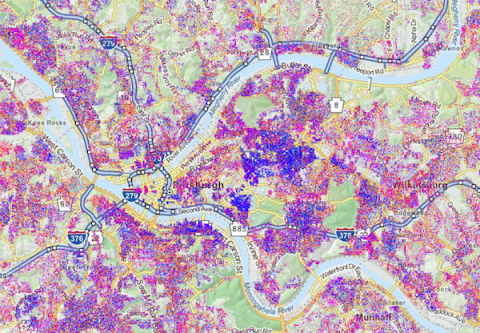
Lindsay Hirschhorn (Mechanical Engineering) and Kelsey Sumner (Global Health and Evolutionary Anthropology) spent ten weeks determining optimal vaccination clinic locations in Durham County for a simulated Zika virus outbreak. They worked closely with researchers at RTI International to construct models of disease spread and health impact, and developed an interactive visualization tool. Project Results Using a...

The team built a ground truth dataset comprising satellite images, building footprints, and building heights (LIDAR) of 40,000+ buildings, along with road annotations. This dataset can be used to train computer vision algorithms to determine a building’s volume from an image, and is significant contribution to the broader research community...

Statistical Science majors Nathaniel Brown and Corey Vernot, and Economics student Guan-Wun Hao spent ten weeks exploring changes in food purchase behavior and nutritional intake following the event of a new Metformin prescription for Type II Diabetes. They worked closely with Matthew Harding and researchers in the BECR Center, as well as Dr. Susan Spratt, an endocrinologist in Duke...

Anne Driscoll (Economics, Statistical Science), and Austin Ferguson (Math, Physics) spent ten weeks examining metrics for inter-departmental cooperativity and productivity, and developing a collaboration network of Duke faculty. This project was sponsored by the Duke Clinical and Translational Science Award, with the larger goal of promoting collaborative success in the School of Medicine...
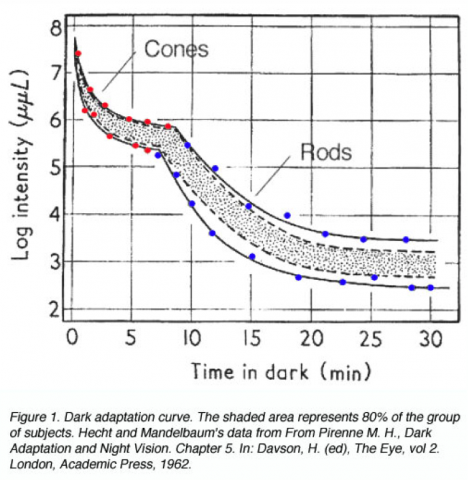
Joel Tewksbury (BME) and Miriam Goldman (Math and Statistics, Arizona State University) spent ten weeks analyzing time-series darkness visual adaptation scores from over 1200 study participants to identify trends in night vision, and ultimately genetic markers that might confer a visual advantage. Project Results The team analyzed FrACT (Freiburg Visual Test) visual acuity and...
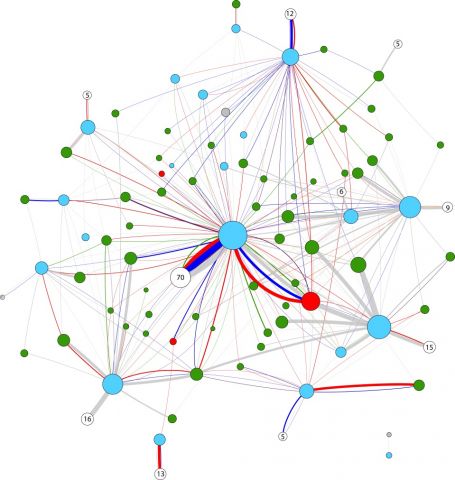
Computer Science and Psychology major Molly Chen, and Neuroscience major Emily Wu spent ten weeks working with patient diagnosis co-occurence data derived from Duke Electronic Medical Records to develop network visualizations of co-occurring disorders within demographic groups. Their goal was to make healthcare more holistic, and reduce healthcare disparities by improving patient and...

Priya Sarkar (Computer Science), Lily Zerihun (Biology and Global Health), and Anqi Zhang (Biostatistics) spent ten weeks utilizing Duke Electronic Medical Record (EMR) data to identify subgroups of diabetic patients, and predict future complications associated with Type II Diabetes. Project Results The team utilized t-Distributed Stochastic Neighbor Embedding (t-SNE) for dimensionality reduction of prescribed medications, medical...

Emily Horn (Public Policy, Global Health), Aasha Reddy (Economics), and Shanchao Wang (Masters Economics) spent ten weeks working with data from the National Asset Scorecard for Communities of Color (NASCC), an ongoing survey project that gathers information about asset and debt of households at a detailed racial and national origin level. They...

Vivek Sriram (Computer Science and Math), Lina Yang (Biostatistics), and Pablo Ortiz (BME) spent ten weeks working in close collaboration with the Department of Biostatistics and Bioinformatics implementing an image analysis pipeline for immunofluorescence microscopy images of developing mouse lungs. Project Results Using the LungMAP image atlas (http://lungmap.net), the team developed an image segmentation pipeline to help researchers more effectively utilize open-access images...
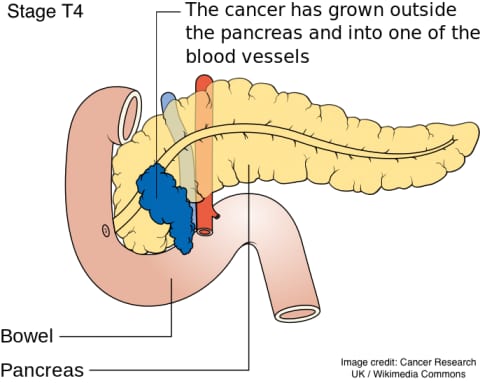
Albert Antar (Biology), and Zidi Xiu (Biostatistics) spent ten weeks leveraging Duke Electronic Medical Record (EMR) data to build predictive models of Pancreatic ductal adenocarcinoma (PDAC). PDAC is the 4th leading cause of cancer deaths in the US, and is most often is diagnosed in stage IV, with a survival rate of only 1% and life expectancy measured in months....

Runliang Li (Math), Qiyuan Pan (Computer Science), and Lei Qian (Masters in Statistics and Economic Modelling) spent ten weeks investigating discrepancies between posted wait times and actual wait times for rides at Disney World. They worked with data provided by TouringPlans. Project Results The team built a linear regression model to predict future wait times on given rides...
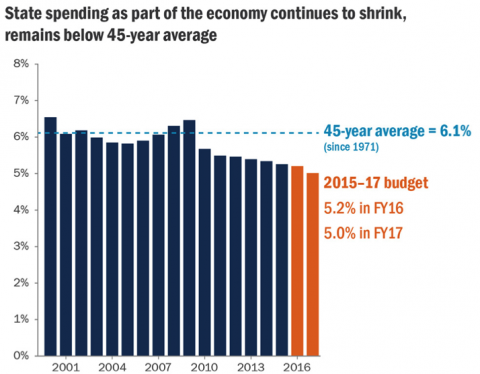
Artem Streltsov (Masters Economics) and IIT Mechanical Engineering major Vinod Ramakrishnan spent ten weeks exploring North Carolina state budget documents. Working closely with the Budget and Tax Center, part of the North Carolina Justice Center, their goal was to help build a keystone tool that can be used for analysis of the state budget as well as...
Yuangling (Annie) Wang, a Math/Stats major, and Jason Law, a Math/Econ major, spent ten weeks analyzing message-testing data about the 2015 Marijuana Legalization Initiative in Ohio; the data were provided by Public Opinion Strategies, one of the nation’s leading public opinion research firms. The goal was to understand how statistics and machine learning...

Weiyao Wang (Math) and Jennifer Du , along with NCCU Physics majors Jarrett Weathersby and Samuel Watson, spent ten weeks learning about how search engines often provide results which are not representative in terms of race and/or gender. Working closely with entrepreneur Winston Henderson, their goal was to understand how to frame this problem via statistical and machine-learning methodology,...

Matthew Newman (Sociology), Sonia Xu (Statistics), and Alexandra Zrenner (Economics) spent ten weeks exploring giving patterns and demographic characteristics of anonymized Duke donors. They worked closely with the Duke Alumni Affairs and Development Office, with the goal of understanding the data and constructing tools to generate data-driven insight about donor behavior. Project Results The team used...
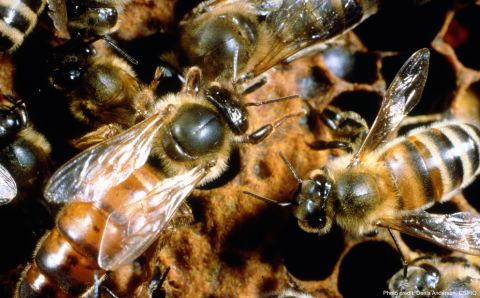
Xinyu (Cindy) Li (Biology and Chemistry) and Emilie Song (Biology) spent ten weeks exploring the Black Queen Hypothesis, which predicts that co-operation in animal societies could be a result of genetic/functional trait losses, as well as polymorphism of workers in eusocial animals such as ants and termites. The goal was to investigate this idea...

BME major Neel Prabhu, along with CompSci and ECE majors Virginia Cheng and Cheng Lu, spent ten weeks studying how cells from embryos of the common fruit fly move and change in shape during development. They worked with Cell-Sheet-Tracker (CST), an algorithm develped by former Data+ student Roger Zou and faculty lead Carlo Tomasi. This algorithm uses computer vision...

Biomedical Engineering major Chi Kim Trinh, and Biostatistics MS student Can Cui spent ten weeks constructing a computational and statistical framework to evaluate the effects of health coaching on Type II Diabetes patients’ quality metrics, including Hemoglobin A1c, blood pressure, eye exam consistency, tobacco use, and prescription adherence to statins, aspirin, and angiotensin converter enzyme (ACE)/...
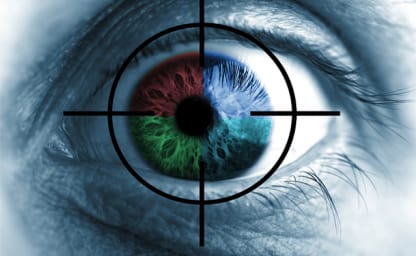
Biomedical Engineering and Electrical and Computer Engineering major David Brenes, and Electrical and Computer Engineering/Computer Science majors Xingyu Chen and David Yang spent ten weeks working with mobile eye tracker data to optimize data processing and feature extraction. They generated their own video data with SMI Eye Tracking Glasses, and created computer vision algorithms to categorize subject...
Showing 1-20 of 24 results