

KC and Patrick led two hands-on data workshops for ENVIRON 335: Drones in Marine Biology, Ecology, and Conservation. These labs were intended to introduce students to examples of how drones are currently being used as a remote sensing tool to monitor marine megafauna and their environments, and how machine learning...

A team of students led by professors Maurizio Forte, Classical Studies and AAHVS and Leonard White, Neurology, studied the embodied aesthetic experience engendered by real and virtual interactions with archeological ruins (“ruinscapes”) and virtual representations of places, spaces, and cultural artifacts associated with an ancient city. The focus will be...
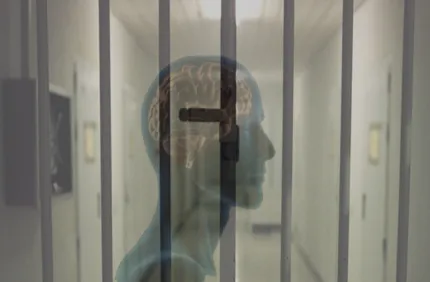
Micalyn Struble (Computer Science, Public Policy), Xiaoqiao Xing (Economics), and Eric Zhang (Math) spent ten weeks exploring the use of neuroscience as evidence in criminal trials. Working with a large set of case files downloaded from WestLaw, the team used natural language processing to build a predictive model that has the potential to automate the...
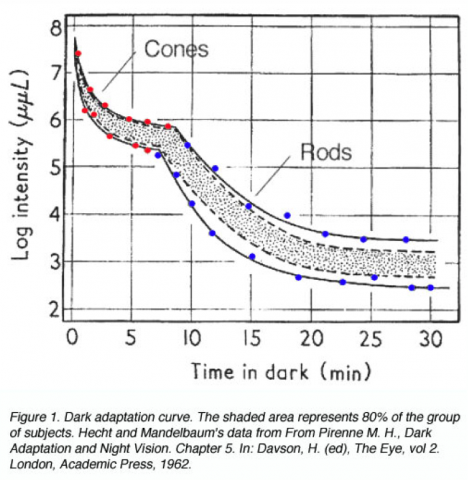
Joel Tewksbury (BME) and Miriam Goldman (Math and Statistics, Arizona State University) spent ten weeks analyzing time-series darkness visual adaptation scores from over 1200 study participants to identify trends in night vision, and ultimately genetic markers that might confer a visual advantage. Project Results The team analyzed FrACT (Freiburg Visual Test) visual acuity and...
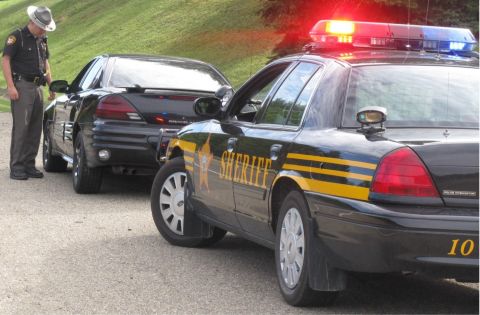
In this Data Expedition, Duke undergraduates were introduced to a real world traffic citation data set. Provided by Dr. Frank R. Baumgartner, a political scientist at UNC, the data consist of 15 years of traffic stops, with over 18 million observations of 53 variables. Graduate student: Derek Owens-Oas Faculty instructor: David Banks...

A team of students will convert publicly available data, that are too unwieldy for easy use, from NC’s Administrative Office of Courts (AOC) into a database that will enable researchers, reporters and others to better understand how the civil legal system impacts North Carolina residents’ economic well-being. AOC’s civil case management system collects a...

Ana Galvez (Cultural and Evolutionary Anthropology), Xinyu Li (Biology), and Jonathan Rub (Math, Computer Science) spent ten weeks studying the impact of diet on organ and bone growth in developing laboratory rats. The goal was to provide insight into the growth dynamics of these model organisms that could eventually be generalized to inform research on human development....

Duke’s enrollment data over the past 50 years speaks volumes about the evolution of the University. Using physical scans courtesy of the Duke University Archives, we manipulate decades of demographic and geospatial data across all Duke schools to create an interactive application (previously available at http://sites.duke.edu/bluedevilbreakdown). Giving users control over how...

Yueru Li (Math) and Jiacheng Fan (Economics, Finance) spent ten weeks investigating abnormal behavior by companies bidding for oil and gas rights in the Gulf of Mexico. Working with data provided by the Bureau of Ocean Energy Management and ExxonMobil, the team used outlier detection methods to automate the flagging of abnormal behavior,...

Zijing Huang (Statistics, Finance), Artem Streltsov (Masters Economics), and Frank Yin (ECE, CompSci, Math) spent ten weeks exploring how Internet of Things (IoT) data could be used to understand potential online financial behavior. They worked closely with analytical and strategic personnel from TD Bank, who provided them with a massive dataset compiled by Epsilon, a global company that specializes in...

Felicia Chen (Computer Science, Statistics), Nikhil Pulimood (Computer Science, Mathematics), and James Wang (Statistics, Public Policy) spent ten weeks working with Counter Tools, a local nonprofit that provides support to over a dozen state health departments. The project goal was to understand how open source data can lead to the creation of a national database of...
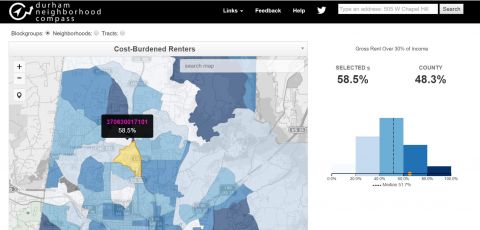
Linda Adams (CompSci), Amanda Jankowski (Sociology, Global Health), and Jessica Needleman (Statistics/Economics) spent ten weeks prototyping small-area mapping of public-health information within the Durham Neighborhood Compass, with a focus on mortality data. They worked closely with the director of DataWorks NC, an independent data intermediary dedicated to democratizing the use of quantitative information.

A team of students collaborated with Biostatistics & Bioinformatics Professor Ethan Fang, and Fuqua Professor Yehua Wei to develop new algorithms for hospital scheduling. Optimal hospital scheduling will fully utilize the resource of the hospital and reduce the wait time of the patients. The new algorithm will lead to an...
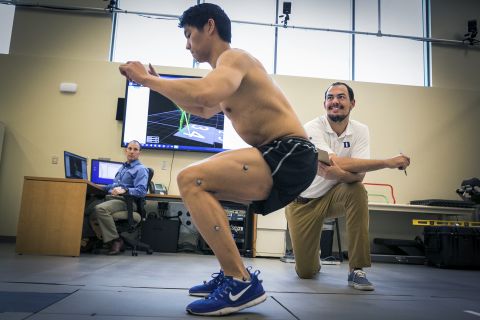
Maria Henriquez (Computer Science, Statistics) and Jacob Sumner (Biology) spent ten weeks building tools to help the Michael W. Krzyzewski Human Performance Lab best utilize its data from Duke University student athletes. The team worked with a large collection of athlete strength, balance, and flexibility measurements collected by the lab. They improved the K Lab’s...

Data+ students led by Prof. Henri Gavin will develop AI models for on-site earthquake early warning, in which sensors at a site provide warnings at that site. The Data+ project will integrate into ongoing work on geophone sensors, IOT microcontrollers, and networking. The Data+ team will focus on machine learning...
Our team members have spent the summer working with the North Carolina Division of Public Health Occupational and Environmental Epidemiology Branch to build a pilot environmental public health data dashboard, with the hope that the pilot tool will be used in DPH’s grant proposal to the CDC for a fully-funded...
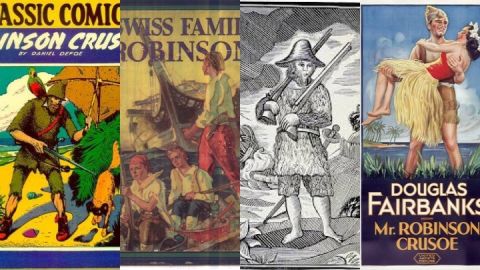
In tracing the publication history, geographical spread, and content of “pirated” copies of Daniel Defoe’s Robinson Crusoe, Gabriel Guedes (Math, Global Cultural Studies), Lucian Li (Computer Science, History), and Orgil Batzaya (Math, Computer Science) explored the complications of looking at a data set that saw drastic changes over the last three centuries in terms of spelling and...
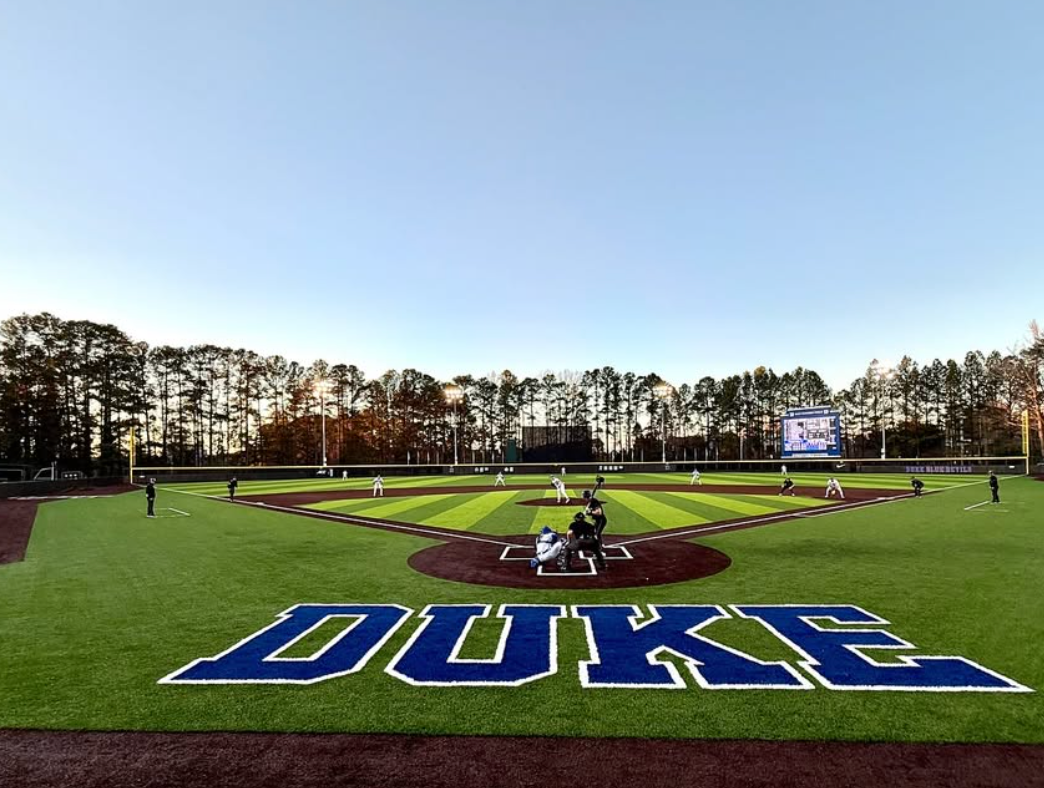
Duke Baseball Analytics team is looking to create a metric called Pitcher WAR. This metric is widely used throughout Major League Baseball to evaluate talent and use as evidence during contract negotiations. WAR stands for Wins Above Replacement, which allows you to see what the value of each player is...
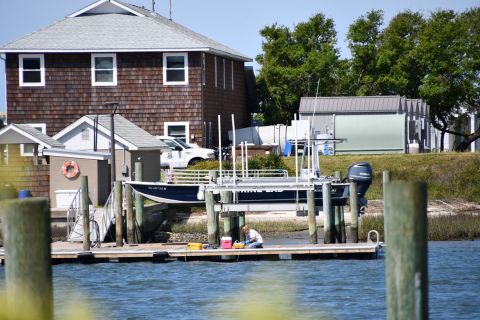
Stats majors Alexandra Lawrence and Morgan Pruchniewski spent ten weeks exploring a dataset comprising 619 variables, including chemical and biological measurements, sourced from the Pivers Island Coastal Observatory (PICO). Using modern time-series analysis techniques, the team delivered key insights to PICO scientific staff, as well as advice for future data...

Platypus is a software solution that comes both as a standalone application and a Photoshop plugin. It is specifically designed to digitally remove cradling artifacts in X-ray images of paintings on panel. This project was made possible thanks to the financial support of the Kress foundation. Read more and download...
Showing 261-280 of 388 results