
2023 Projects

This data expedition focused on animal navigation, specifically the mechanisms by which organisms orient themselves in the direction they need to move. The students gathered their own orientation data using pill bugs, and in the process learned common experimental methods to test hypotheses about orientation, as well as statistical methods...

Students will collaborate to develop a document that outlines the current policy, research, and practice landscape of Whole Genome Sequencing for New Born Screening. Students will have the opportunity to conduct a thorough review of the existing literature and consult with relevant stakeholders to synthesize a clear and concise report....
Students on this project will assist Illumina with the research and assessment of Community-Based Review Boards to enable greater transparency in the ethical collection and use of patient data. Students should expect to familiarize themselves with the context of different types of ethics review boards and their role in the...

Students on this project will assist Illumina with the development of good genomic data-sharing principles to help garner effective communication and trust among patients, physicians, and genomic researchers. Specifically, students will research and propose data-sharing principles to encourage the ethical collection, sharing, and communication of patient genomic data with their...
Students will coordinate with the Organisation for Economic Co-operation and Development (OECD) Working Party on Bio-, Nano-, and Converging Technology to develop strategies to anticipate the development of emerging technologies and novel applications beginning with the field of Synthetic Biology (synbio). The development of these strategies will help the OECD...
Students will coordinate with the Organisation for Economic Co-operation and Development (OECD) Working Party on Bio-, Nano-, and Converging Technology to support the development of impact assessment tools for the use of neurotechnologies. This project would constitute Phase I of developing a “neurotech” impact assessment tool that analyses the effects...

Students will coordinate with the Organisation for Economic Co-operation and Development (OECD) Working Party on Bio-, Nano-, and Converging Technology to develop a governance framework to both encourage the development of and mitigate the potential harms of emerging technologies. Framework development will require creative and interdisciplinary research to identify different dimensions of risks posed...

Students on this project will collaborate with select companies in the early stages of developing digital,hardware, and biotech mental health tools to develop an ethical framework for operating the companyover time. This work will require students to familiarize themselves with a range of new technologicalapplications, including virtual and extended reality,...

A team of students led by researchers within the Saltwater Intrusion and Sea Level Rise (SWISLR) Research Coordination Network created a geospatial database summarizing the current extent of SWISLR and the current knowledge on SWISLR within the North American Coastal Plain. Students were responsible for mapping scholarly articles, news stories,...

A team of students led by Civil & Environmental Engineering Professor Helen Hsu-Kim developed a resource reserves database of coal ash wastes stored in hundreds of legacy disposal sites in the United States. The team extracted key information from historical datasets on coal energy production, incorporated geochemical information of coal...

Researchers with the Duke River Center and the Watershed Biogeochemistry Lab investigate patterns of anoxia, or periods of little to no oxygen, in rivers. Oxygen is a necessary element for many organisms to live in rivers, but researchers know little about the timing, duration, and magnitude of low oxygen time...

This project helped to build a globally scalable foundation model to enable near real-time tracking of climate change causes and impacts. A foundation model is a model (usually a deep neural network) that has been trained on a large and diverse set of data, after which it can be adapted...

A team of students led by researchers in the Social Science Research Institute and Departments of Mathematics and Statistics curated a unique video data set for studying how different aspects of social interactions relate to social and psychiatric variables, like trust, empathy, and scores on clinical social competence and autism...

A team of students led by researchers in the Computer Science Department and the coaching staff of the Duke Women’s Soccer (DWS) team developed analytical tools to provide quantitative evaluations of individual players and whole teams. By applying machine learning techniques and other data science methods to deep event-level and...
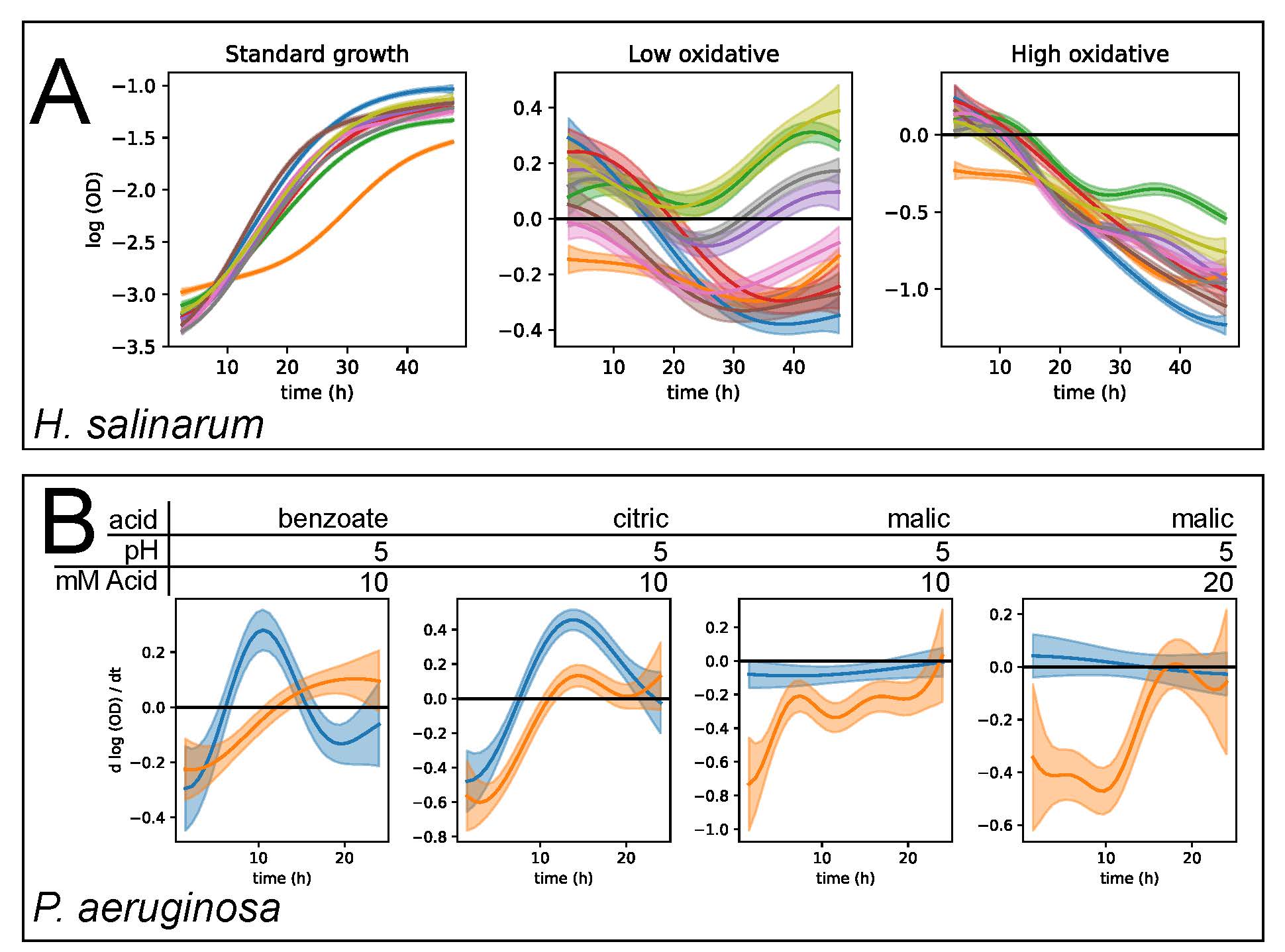
The goal of this Data+ project was to apply and extend custom analytics solutions to understand and predict microbial population growth. An explosion of data has resulted from tracking the growth of bacteria in high throughput devices. These data were generated to understand how microbes grow. Better models that fit...

Using data from the Durham Compass and the NC School Report Card among many other sources, this team continued the development of an interactive R Shiny dashboard that permits exploration of school statistical data. The team aimed to explore Durham Public School (DPS) zones through an asset-based lens to support ethical...

A team of students led by researchers from the Nicholas School of the Environment developed an app to estimate the distance of animals from a camera trap. Students merged camera trap data with terrestrial lidar (3D imagery of forest around the camera trap) to locate the position of animals. By...
A team of students led by researchers in the BIG IDEAs Lab optimized and further developed an existing cloud-based infection detection platform that populates and translated wearable data from a variety of sources. The project involved working with existing wearable data pipelines (e.g., APIs) to collect, process, and visualize wearable...

Using digitized card catalogs from the David M. Rubenstein Rare Book and Manuscript Library, a team of students explored extracting structured data from over 115,000 subject cards to develop searchable and sortable descriptions of manuscript and archival collections. They prepared the digitized subject cards for online access in the Internet...

A team of students led by a data scientist at NetApp developed the means to evaluate technical documentation through machine learning techniques. Students identified features of language and documents that can be used to demonstrate how effective that documentation is at communicating technical specifications. Additionally, students applied machine learning methods...
Showing 1-20 of 36 results