

Students collaborated with the research team of Dr. Kathleen Cooney, including prominent partners both at Duke and other institutes, to identify genetic variants likely associated with early onset prostate cancer in African American patients identified by the Metropolitan Detroit Cancer Surveillance System (MDCSS) cancer registry. Students analyzed whole exome sequencing...

A team of students led by researchers in the O-Lab for auditory neuroscience determined whether the imagination of speech and nonspeech sounds can be distinguished using on a non-invasive measurement of activation in the brain, electroencephalography (EEG). Students collected and analyzed EEG data from human participants in response to both...

Students will create accessible, actionable data on climate risks and climate resilience efforts in the Milwaukee River area. By harnessing existing data sources as inputs for hazard modeling, focused on flooding, students will use techniques to account for uncertainties in inputs, providing more accurate and adaptable risk assessments for communities....
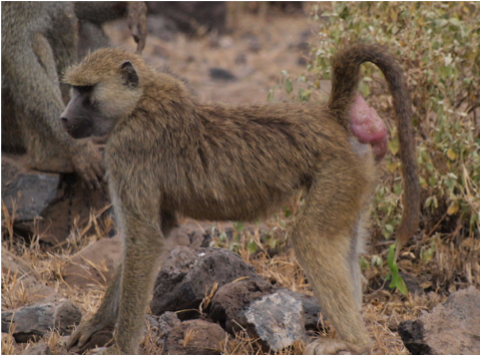
Female baboons occasionally exhibit large swellings on their behinds. Although these “sexual swellings” may evoke disgust from human on-lookers, they provide important information to group members about a female’s reproductive state. To figure out what these sexual swellings mean and whether male baboons notice, we need to look at the...
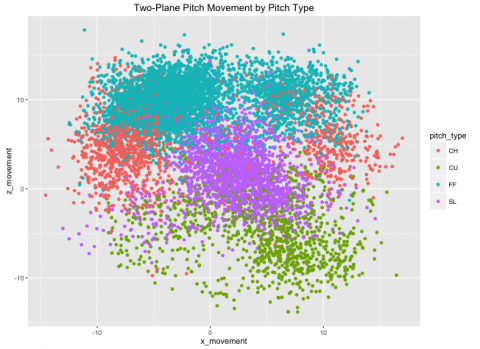
Graduate Student: Jacob Coleman, 3rd year Ph.D. student in Statistical Science Faculty Instructor: Colin Rundel Class: STA 112, Data Science Data management, summarization, and exploration with R package dplyr Data visualization through R package ggplot2 Worked with state-of-the-art data pulled from online source Summary In this Data Exploration, students were...

Team A: Video data extraction Alexander Bendeck (Computer Science, Statistics) and Niyaz Nurbhasha (Economics) spent ten weeks building tools to extract player and ball movement in basketball games. Using freely available broadcast-angle video footage which required much cleaning and pre-processing, the team used OpenPose software and employed neural network methodologies. Their pipeline fed...

This data expedition focused on the mechanisms animals use to orient using environmental stimuli, the methods that scientists use to test hypotheses about orientation, and the statistical methods used with circular orientation data. Students collected their own data set during the class period, performed hypothesis testing on their data using...

This data expedition focused on the mechanisms animals use to orient using environmental stimuli, the methods that scientists use to test hypotheses about orientation, and the statistical methods used with circular orientation data. Students collected their own data set during the class period, performed hypothesis testing on their data using...

This data expedition focused on animal navigation, specifically the mechanisms by which organisms orient themselves in the direction they need to move. The students gathered their own orientation data using pill bugs, and in the process learned common experimental methods to test hypotheses about orientation, as well as statistical methods...

This data expedition focused on animal navigation, specifically the mechanisms by which organisms orient themselves in the direction they need to move. The students gathered their own orientation data using pill bugs, and in the process learned common experimental methods to test hypotheses about orientation, as well as statistical methods...
Graduate Students: Alyvia Martinez and Danae Diaz (adapted from Granger and De La Mater 2022) Sponsoring Faculty: Dr. Stephen Nowicki Undergraduate Course: Biology 268-Mechanisms of Animal Behavior Overview: Our Data Expedition focused on introducing students to the application of circular data in regard to animal navigation. Students worked in groups...

Keith Cressman (CS/ECE), Isa Lu (Econ), and Ivan-Aleksandr Mavrov (Econ/Math) spent ten weeks exploring how NLP tools could be put to use to improve document analysis workflow at DUMAC Inc., which is responsible for managing the assets of Duke University. View the team’s project poster here Watch the team’s...
Melanie Lai Wai (Statistics) and Saumya Sao (Global Health, Gender Studies) spent ten weeks developing a platform which enables users to understand factors that influence contraceptive use and discontinuation. Their work combined data from the Demographic and Health Surveys contraceptive calendar with open data about reproductive health and social indicators from the World...

Dennis Harrsch, Jr. ( Computer Science ), Elizabeth Loschiavo ( Sociology ), and Zhixue (Mary) Wang ( Computer Science, Statistics ) spent ten weeks improving upon the team’s web platform that allows users to examine contraceptive use in low and middle income (LMIC) countries collected by the Demographic and Health Survey (DHS) contraceptive calendar. The...
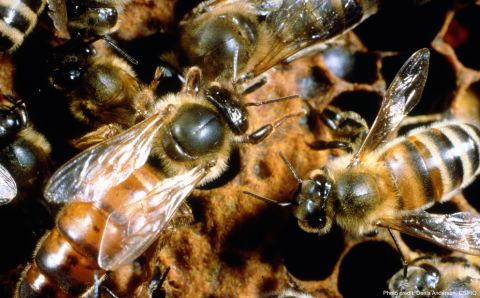
Xinyu (Cindy) Li (Biology and Chemistry) and Emilie Song (Biology) spent ten weeks exploring the Black Queen Hypothesis, which predicts that co-operation in animal societies could be a result of genetic/functional trait losses, as well as polymorphism of workers in eusocial animals such as ants and termites. The goal was to investigate this idea...

Cathy Lee (Statistics) and Jennifer Zheng (Math, Emory University) spent ten weeks building tools to help Duke University Libraries better understand its journal purchasing practice. Using a combination of web-scraping and data-merging algorithms, the team created a dashboard to help library strategists visualize and optimize journal selection. Click here to read the Executive Summary Faculty...
![srcuacslogo2[76]](https://bigdata.duke.edu/wp-content/uploads/2025/12/srcuacslogo276.jpg)
This project examines how high school Career and Technical Education (CTE) programs in North Carolina Community Schools connect with nearby community college certificate programs and local workforce needs, especially in rural counties. Using publicly available data from state education, workforce, and economic agencies, the study looks at whether students have...

A team of students led by Dr. Shanna Sprinkle of Duke Surgery will combine success metrics of Duke Surgery residents from a set of databases and create a user interface for residency program directors and possibly residents themselves to view and better understand residency program performance. Using MySQL or Oracle, students will...
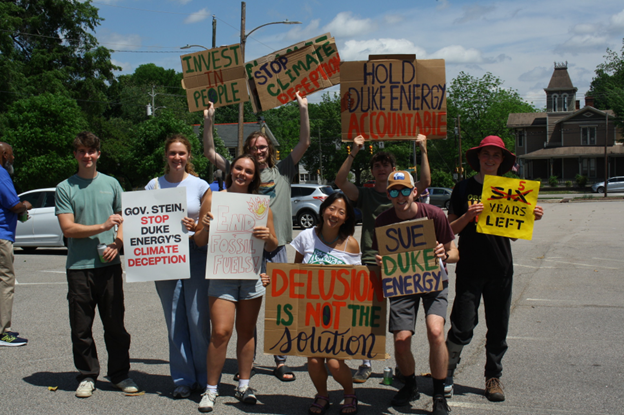
A team of students led by Pratt professor Rachel Beaudoin will develop generalizable models to quantify the greenhouse gas footprint of Durham organizations and to assess the impacts of decarbonization projects. Students will work with a dataset of Durham Public Schools’ historical energy and procurement data to develop a model...

Online data scraping has reached a fever pitch, as AI creators seek food for their hungry models. Researchers from the Argus Lab at Duke are building tools to analyze web scraping at scale based on analysis of Duke’s web logs. Data+ students will investigate the time-scale of AI data scraping (e.g....
Showing 41-60 of 388 results