
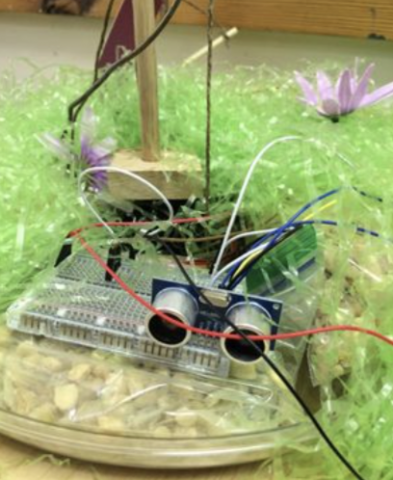
Students in the Performance and Technology Class create a series of performances that explore the interface between society and our machines. With the theme of the cloud to guide them, they have created increasingly complex art using digital media, microcontrollers, and motion tracking. Their work will be on display at the...

How do elites maintain power when the world around them is being radically transformed? Between the late sixteenth and early eighteenth centuries, England was reshaped by the explosive growth of global trade. Political and socio-economic elites had to adapt—or risk losing power. Who benefited from these changes, who lost out,...

Students will analyze data on climate risk, most likely including flood risk, perhaps a combination of public data, private data, and insurance sector data for pilot communities in North Carolina. They will integrate this data with other local data sets such as critical community infrastructure (schools, hospitals) and provide visualization...
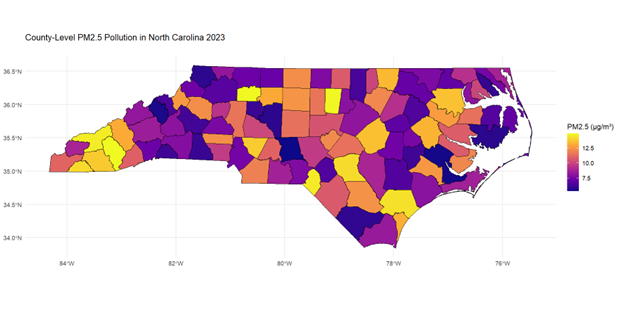
Explore Climate and Health Equity with Duke’s REGAL Lab! Join the Research to Eliminate Global Cancer Disparities (REGAL) Lab at the Duke University School of Medicine for a hands-on research experience on climate and health equity. Students will compile and analyze North Carolina county-level environmental indicators, such as air quality,...
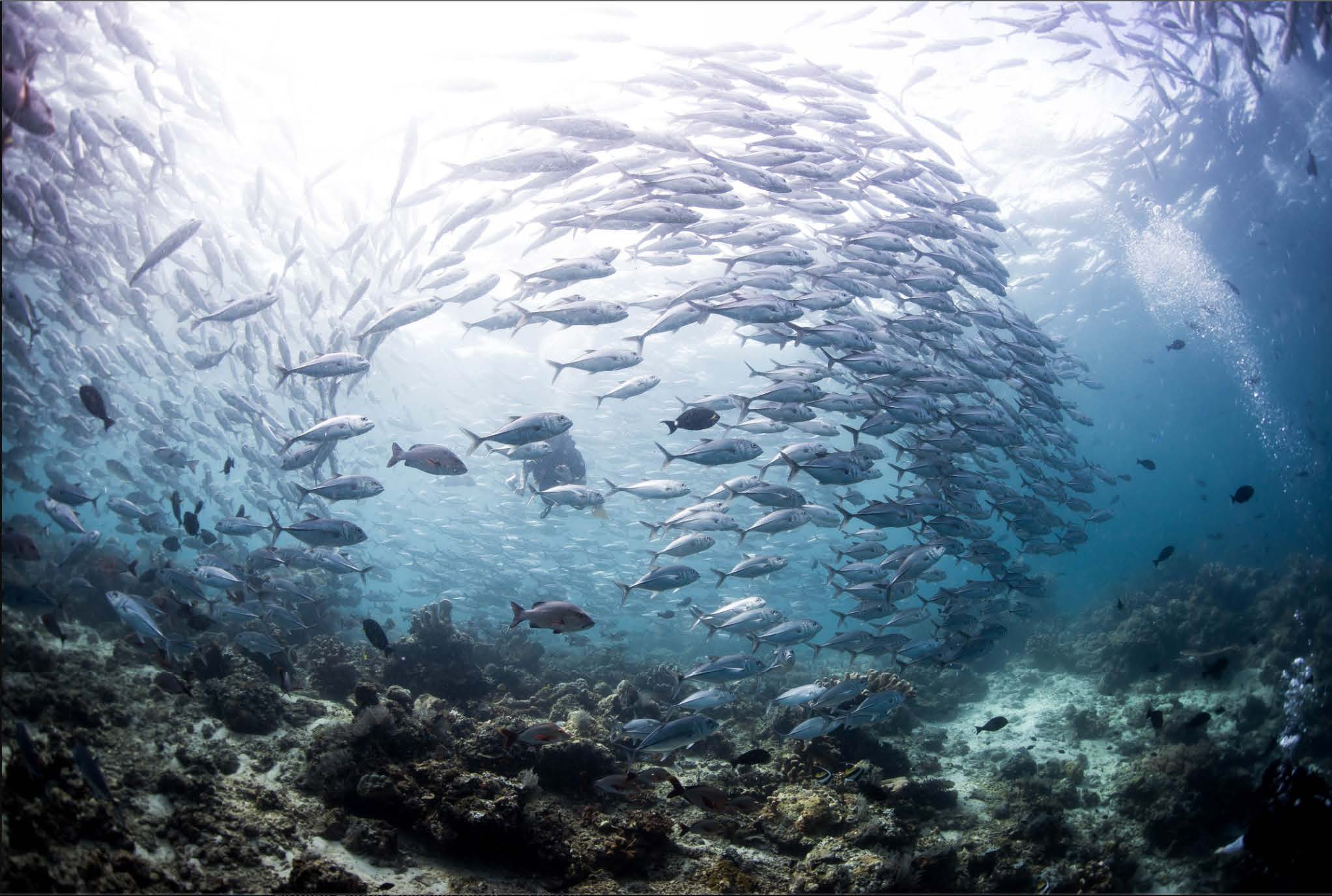
A team of students, led by Nicholas School professor David Gill and Masters student Sameer Swarup, will develop the first global coastal social-environmental atlas: a high-resolution, interactive data platform that provides social, economic, demographic, and environmental data relevant to climate and ocean science and conservation. Students will synthesize spatial and...

A team of students led by Dr. Tananun Songdechakraiwut (Computer Science) and Dr. Michael Lutz (Neurology) will use a newly released dataset from the Alzheimer’s Disease Sequencing Project Phenotype Harmonization Consortium (ADSP-PHC) to study relationships among cognitive measures, brain imaging, biomarkers, and clinical features of Alzheimer’s disease and related dementias...
William Willis (Mechanical Engineering, Physics) and Qitong Gao (Masters Mechanical Engineering) spent ten weeks with the goal of mapping the ocean floor autonomously with high resolution and high efficiency. Their efforts were part of a team taking part in the Shell Ocean Discovery XPRIZE, and they made extensive use of simulation software built from...

In partnership with the Southeast Regional Coalition for University-Assisted Community Schools and the North Carolina Community Schools Coalition, a team of students will map the Rosenwald Schools across the Black Belt region of North Carolina. Students will mine for data that highlights historic assets of Black community while drawing correlations...
Project Summary Evan Dragich (Stats/Bio) and Katie Tan (Econ) spent ten weeks working with two sets of survey data provided by alumni of the Duke Graduate School. After cleaning data, the team used R Shiny to build an interactive dashboard that can assist leadership aiming to improve the direction and...
A team of students led by Courtnea Rainey, David Jamieson-Drake, and Edward Balleisen will explore survey data from completers of the PhD and Duke PhD alumni to establish important correlations, document key patterns and longitudinal trends, and develop visualizations that can inform institutional decision-making. In addition to updating the work...

Over ten weeks, Mathematics/Economics majors Khuong (Lucas) Do and Jason Law joined forces with Analytical Political Economy Masters student Feixiao Chen to analyze the spati-temporal distribution of birth addresses in North Carolina. The goal of the project was to understand how/whether the distributions of different demographic categories (white/black, married/unmarried, etc.) differed, and how these differences connected to a variety of...
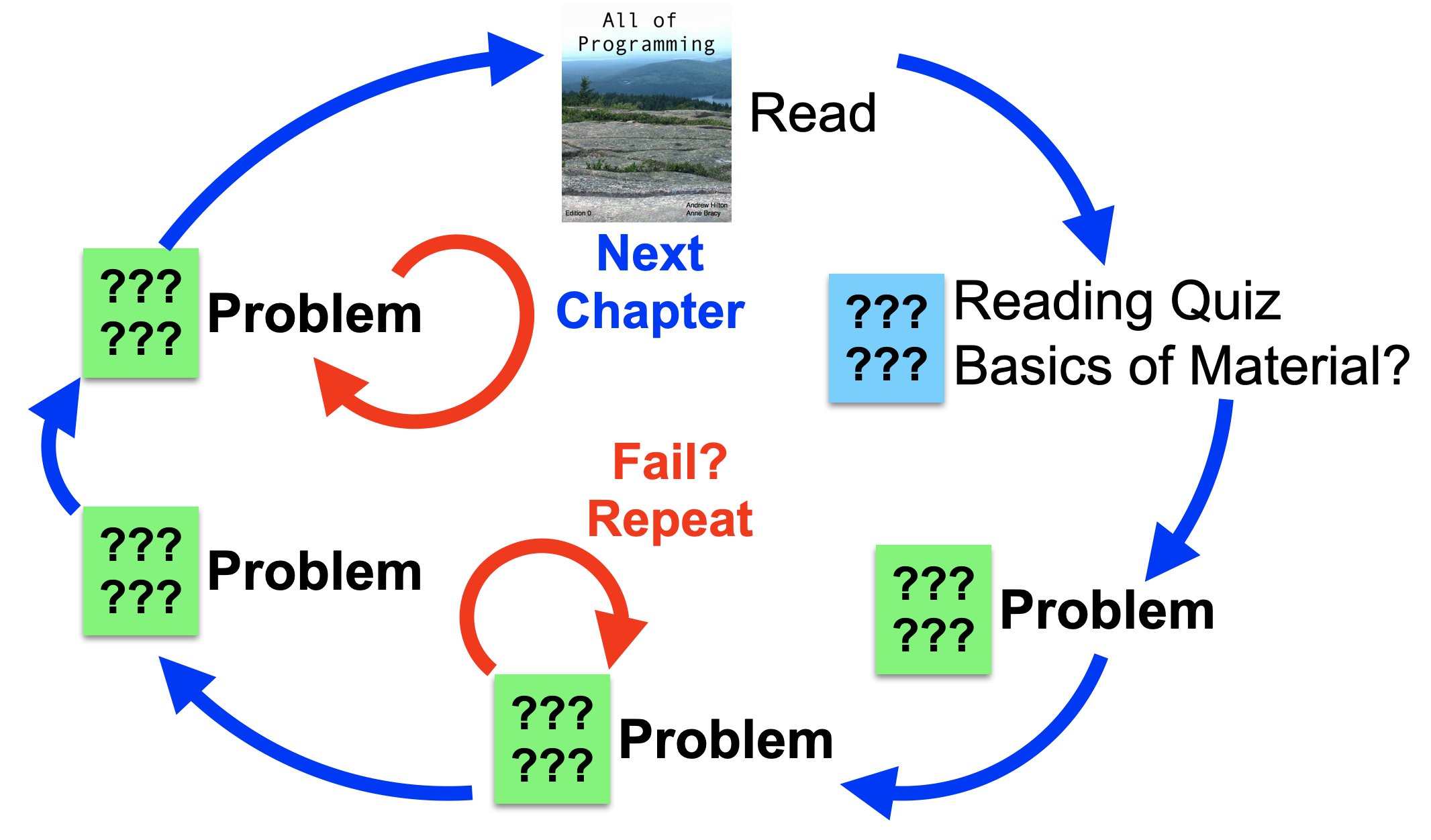
A team of students lead by ECE faculty member Genevieve Lipp will use mastery learning data from a graduate programming course to develop a tool for predicting student performance and inform beneficial course policies. Given the grade, timeliness, and number of submissions for each autograded programming assignment, the team will...
Brooke Erikson (Economics/Computer Science), Alejandro Ortega (Math), and Jade Wu (Computer Science) spent ten weeks developing open-source tools for automatic document categorization, PDF table extraction, and data identification. Their motivating application was provided by Power for All’s Platform for Energy Access Knowledge, and they frequently collaborated with professionals from that organization. Click here to read the...

Students collaborated with CEE Professors David Carlson and Mike Bergin to model the effects of land use on the urban heat island effect using satellite imagery and ground-level temperature measurements. Students used machine learning to segment satellite images of Durham, North Carolina by land use. They then paired land use...

A team of students led by researchers at the Duke Marine Lab will explore the changing distribution of krill around the Antarctic Peninsula. Krill are a key prey species in this ecosystem, supporting a number of animals including whales, seals, and penguins, but they are dependent on winter sea ice...
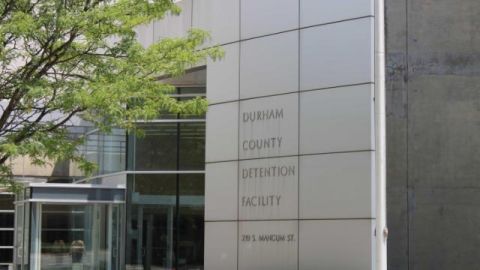
This summer, our objective was to take data provided by the Durham County Detention Facility (DCDF), Duke Health, and Lincoln Community Health Center and analyze trends across the local justice system and these health care institutions, specifically in regards to individuals with mental illness. We analyzed the experience of individuals...

A team of students led by researchers Nicole Schramm-Sapyta (Duke Institute for Brain Sciences) and Maria Tackett (Statistical Science) will explore the impacts of community health services and local laws and policies on the justice-involved population in Durham. The team will create a public-facing interactive timeline of the implementation of...

A team of students led by researchers Nicole Schramm-Sapyta, Ph.D. (Duke Institute for Brain Sciences) and Maria Tackett, Ph.D. (Department of Statistical Science) examined data from the Durham County Detention Facility and Duke Health System to analyze the effect of mental health interventions, state and local policies, insurance coverage, and...
This team, now in its 6th year, will examine a rich new dataset to glean insights about the programs and services offered during incarceration at the Durham County Detention Facility (DCDF). The team will clean and explore the new data set and combine it with existing data sets of bookings...
This team of students will study a dataset that combines data from the Durham County Detention Facility and Duke Health, with an interest in examining the intersection of mental illness and incarceration. This summer’s goal will be to develop data visualizations that help to show the effect of supportive programs...
Showing 221-240 of 388 results