

Gary Koplik (Masters in Economics and Computation) and Matt Tribby (CompSci, Statistics) spent ten weeks investigating the burden of rare diseases on the Duke University Health System (DUHS). They worked with a massive set of ICD diagnosis codes and visit data provided by DUHS. Project Results: The team created cohorts of patients with and without rare disease diagnosis codes...

A team of students led by Physics professor Dan Scolnic collaborated with Duke Dining leadership to provide an in-depth, quantitative accounting of the carbon footprint of the Duke Dining program. Students used the latest research quantifying CO2 equivalent greenhouse gas emissions for various food types, meals, and sources to produce...
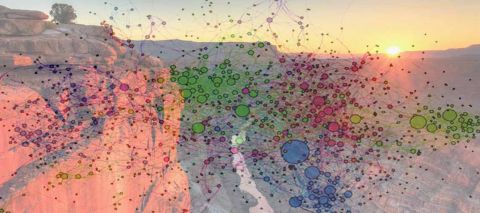
Spenser Easterbrook, a Philosophy and Math double major, joined Biology majors Aharon Walker and Nicholas Branson in a ten-week exploration of the connections between journal publications from the humanities and the sciences. They were guided by Rick Gawne and Jameson Clarke, graduate students from Philosophy and Biology. Project Results The team painstakingly created citation networks for several major...

A team of students led by researchers in the Hydroclimatological Lab created a workflow/pipeline for comprehensively estimating the carbon emissions from the Southeastern (SE) United States (US) wetlands using machine learning techniques applied to multi-source data, including field measurements, remote sensing products, and biophysical model outputs. The team first applied...

Understanding how to generate, analyze, and work with datasets in the humanities is often a difficult task without learning how to code or program. In humanities centered courses, we often privilege close reading or qualitative analysis over other methods of knowing, but by learning some new quantitative techniques we better prepare...
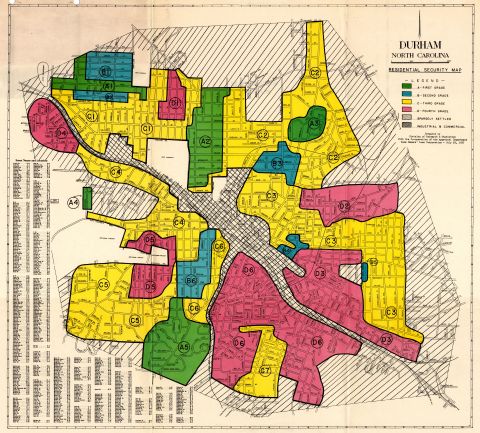
Our team examined the relationship between race and home values across several units of analysis (household, address, HOLC rating area, census block, block group, and tract) in Durham, NC. We combined data from the decennial censuses (1940-2010), American Community Survey (2005-2018), Durham County Register of Deeds (1997-2020), and Durham County...

Tejvasi Patil (MEM), Sophia Stameson (CS), and Larry Zheng (Bio) spent ten weeks working with drone footage from different rainforest sources. The team designed a pipeline that performed image classification on the drone footage, and curated a training dataset using SQL. View the team’s project poster here Watch the...
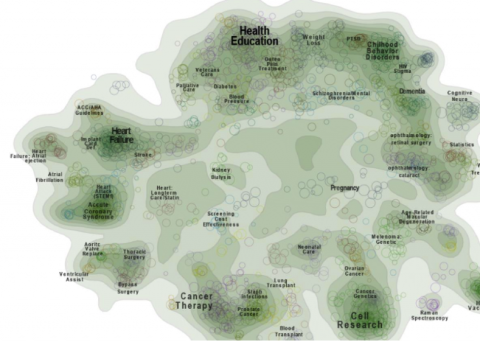
Zhong Huang (Sociology) and Nishant Iyengar (Biomedical Engineering) spent ten weeks investigating the clinical profiles of rare metabolic diseases. Working with a large dataset provided by the Duke University Health System, the team used natural language processing techniques and produced an R Shiny visualization that enables clinicians to interactively explore diagnosis clusters. Click...
Aidan Fitzsimmons (Public Policy, Mathematics, Electrical & Computer Engineering), Joe Choo (Mathematics, Economics) and Brooke Scheinberg (Mathematics) spent ten weeks partnering with the Durham Crisis Intervention Team, the Criminal Justice Resource Center, and the Stepping Up Initiative. Utilizing booking data of 57,346 individuals provided by the Durham County Jail, this team was able to create visualizations and predictive...

Stats/Sociology major Mitchelle Mojekwu joined Neuroscience majors Kassie Hamilton and Zineb Jaidi in a ten-week exploration of data relevant to an upcoming public school zone redistricting in Durham County. Using information acquired from the General Social Survey and the US Census, the team applied modern mathematical and statistical methods for...
A team of students led by researchers in the BIG IDEAs Lab optimized and further developed an existing cloud-based infection detection platform that populates and translated wearable data from a variety of sources. The project involved working with existing wearable data pipelines (e.g., APIs) to collect, process, and visualize wearable...
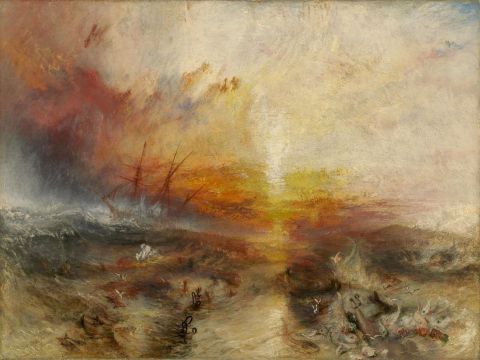
The Middle Passage, the route by which most enslaved persons were brought across the Atlantic to North America, is a critical locus of modern history—yet it has been notoriously difficult to document or memorialize. The ultimate aim of this project is to employ the resources of digital mapping technologies as...

A team of students led by Civil & Environmental Engineering Professor Helen Hsu-Kim developed a resource reserves database of coal ash wastes stored in hundreds of legacy disposal sites in the United States. The team extracted key information from historical datasets on coal energy production, incorporated geochemical information of coal...
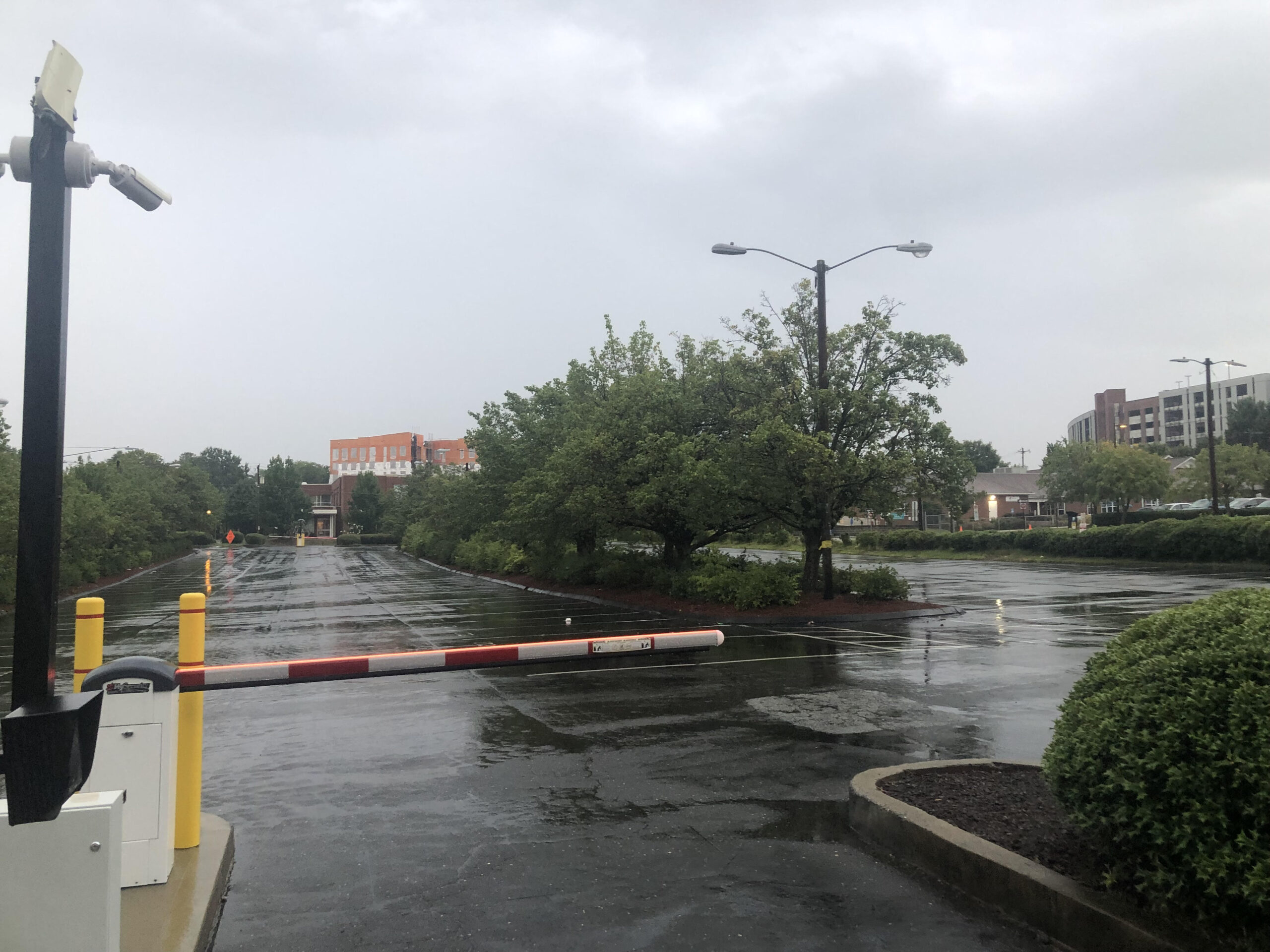
A team of students led by Dr. Jim Heffernan of the Nicholas School of the Environment, used remote imagery and object identification tools to determine changes in parking lot occupancy in the Research Triangle region during the Covid-19 pandemic’s acute and post-acute phases. Students used open-source geospatial data to select...

This is an overview of intellectual and technical adventures rooted in the project of organizing an exhibition at the North Carolina Museum of Art (NCMA) that reunites, for the first time in more than 100 years, the panels of the 14th-century Italian St. John altarpiece by Francescuccio Ghissi. A more...

Ethan Levine, Annie Tang, and Brandon Ho spent ten weeks investigating whether personality traits can be used to predict how people make risky decisions. They used a large dataset collected by the lab of Prof. Scott Huettel, and were mentored by graduate students Emma Wu Dowd and Jonathan Winkle. Project Results The team...

Researchers with the Duke River Center and the Watershed Biogeochemistry Lab investigate patterns of anoxia, or periods of little to no oxygen, in rivers. Oxygen is a necessary element for many organisms to live in rivers, but researchers know little about the timing, duration, and magnitude of low oxygen time...

This project is also part of Duke’s first Climate+ cohort. Duke Data+ students, in collaboration with Dr. Emily Bernhardt (faculty advisor) and Audrey Thellman (graduate student) will evaluate how changing ice and snow conditions are impacting river ecosystems through classified ice imagery. Currently, our team has data from 7 field...
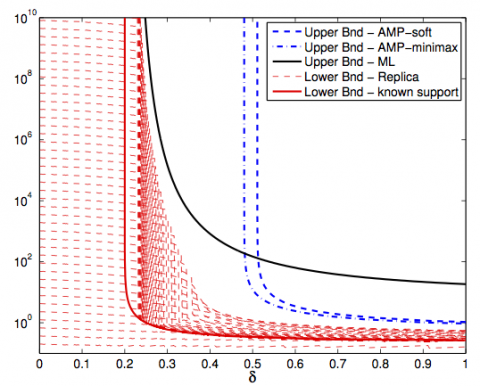
Successful high-resolution signal reconstruction — in problems ranging from astronomy to biology to medical imaging — depends crucially our ability to make the most out of indirect, incomplete, and inaccurate data. A large and active area of research, known as compressed sensing, has drawn researchers from applied mathematics, information theory, mathematical statistics, and...
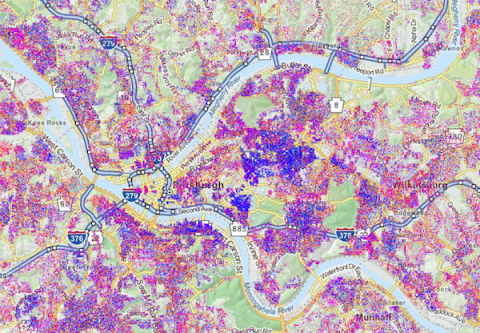
Lindsay Hirschhorn (Mechanical Engineering) and Kelsey Sumner (Global Health and Evolutionary Anthropology) spent ten weeks determining optimal vaccination clinic locations in Durham County for a simulated Zika virus outbreak. They worked closely with researchers at RTI International to construct models of disease spread and health impact, and developed an interactive visualization tool. Project Results Using a...
Showing 301-320 of 388 results