
2022 Projects

This project, conducted during a two-week workshop, combined data extraction from a database of early modern print materials (Early English Books Online; EEBO) with the translation of archival evidence through visualizations of networks relating to prominent figures in the trade.

In ecology and watershed sciences, large datasets often come from a variety of sources like continuous automated sensors, water grab samples, and community-collected scientific data. Overcoming these challenges is critical to explore the prevalence, persistence, and impact of degraded water quality on human society and wildlife. This project exposes students...

This data expedition focused on the mechanisms animals use to orient using environmental stimuli, the methods that scientists use to test hypotheses about orientation, and the statistical methods used with circular orientation data. Students collected their own data set during the class period, performed hypothesis testing on their data using...
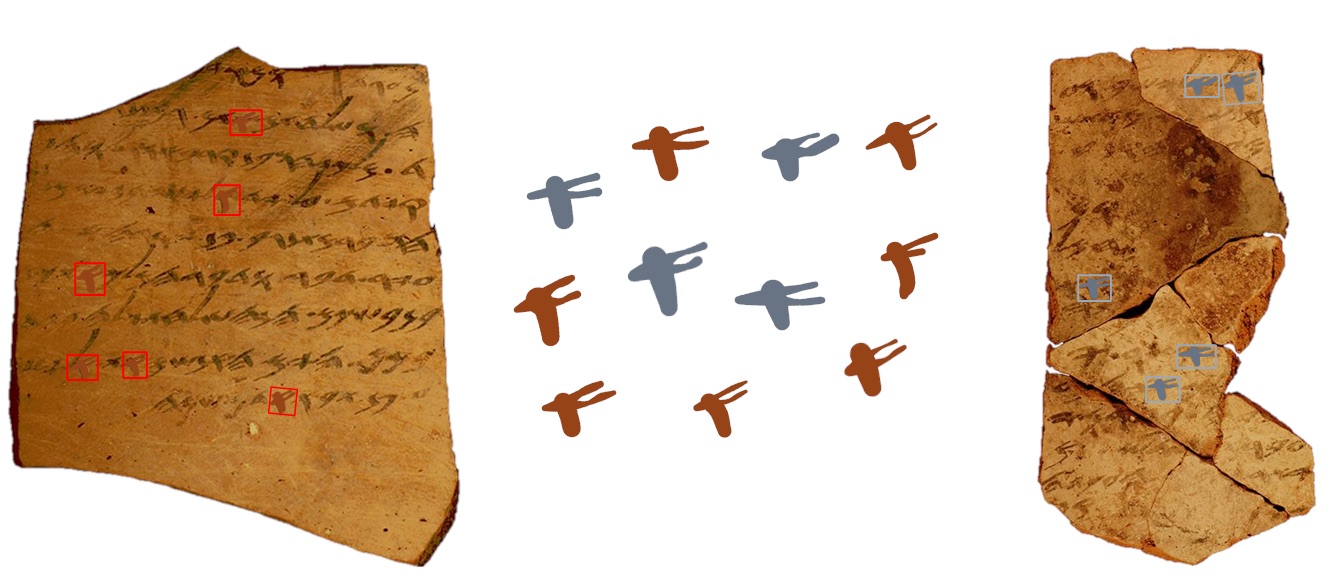
This project is a collaboration of researchers from the Rhodes Information Initiative and a team located at Tel-Aviv University. The team tackles various questions regarding literacy in the ancient kingdoms of Judah and Israel of the First Temple period (Iron Age) through a computational analysis of handwritten documents. We have...
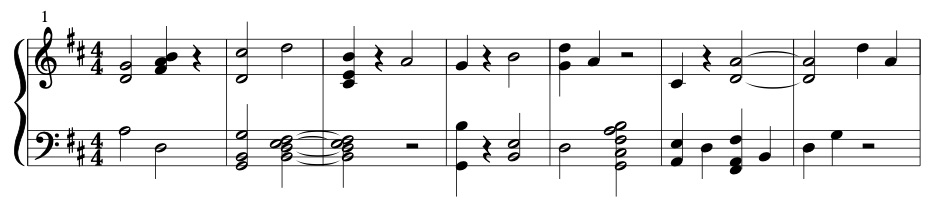
Anna Yanchenko and Sayan Mukherjee Algorithmic composition of music has a long history and with the development of powerful deep learning methods, there has recently been increased interest in exploring algorithms and models to create art. We explore the utility of Hidden Markov Models in composing classical piano pieces from...

Platypus is a software solution that comes both as a standalone application and a Photoshop plugin. It is specifically designed to digitally remove cradling artifacts in X-ray images of paintings on panel. This project was made possible thanks to the financial support of the Kress foundation. Read more and download...

This is an overview of intellectual and technical adventures rooted in the project of organizing an exhibition at the North Carolina Museum of Art (NCMA) that reunites, for the first time in more than 100 years, the panels of the 14th-century Italian St. John altarpiece by Francescuccio Ghissi. A more...

Exposure to local pathogens is a significant selective pressure on the human genome: the strongest selective forces identified in modern human populations are for mutations that confer increased resistance to malaria infection. Understanding how human genetic variation impacts susceptibility to pathogens can reveal important aspects of disease biology and reveal...
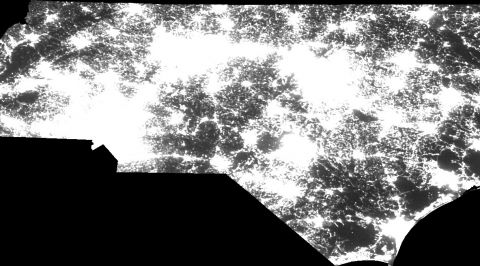
How does human habitation relate to patterns in the natural environment? How do species respond to the presence of, and changes in, habitation? In this Data Expedition, students make use of public datasets from the Census and the Global Biodiversity Information Facility to examine relationships between individual species and human...

Intelligent mobile sensor agent can adapt to heterogeneous environmental conditions, to achieve the optimal performance, such as demining, maneuvering target tracking. The mobile sensor agent is a robot with onboard sensors, and it is deployed to navigate obstacle-populated workspaces subject to sensing objectives. The expected performance of available future measurements is...
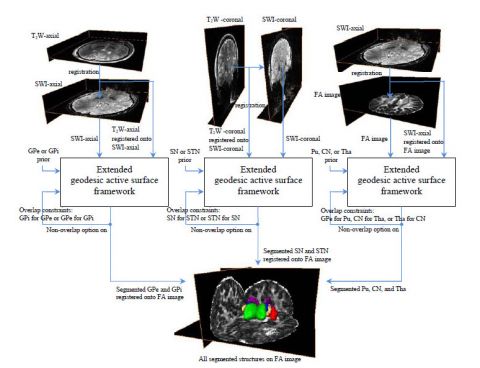
Volumetric segmentation of sub-cortical structures such as the basal ganglia and thalamus is necessary for non-invasive diagnosis and neurosurgery planning. This is a challenging problem due in part to limited boundary information between structures, similar intensity profiles across the different structures, and low contrast data. This work presents a semi-automatic...
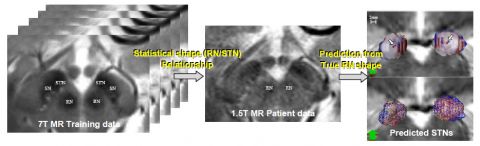
The sub-thalamic nucleus (STN) within the sub-cortical region of the Basal ganglia is a crucial targeting structure for Deep brain stimulation (DBS) surgery, in particular for alleviating Parkinson’s disease (PD) symptoms. Volumetric segmentation of such small and complex structure, which is elusive in clinical MRI protocols, is thereby a pre-requisite...
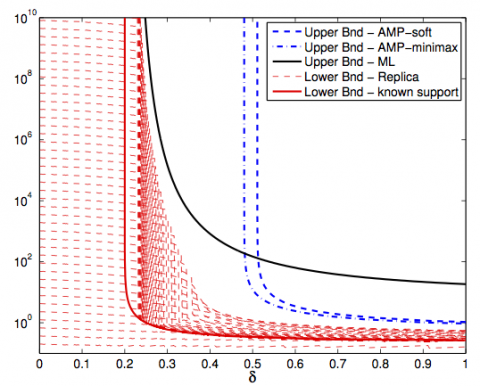
Successful high-resolution signal reconstruction — in problems ranging from astronomy to biology to medical imaging — depends crucially our ability to make the most out of indirect, incomplete, and inaccurate data. A large and active area of research, known as compressed sensing, has drawn researchers from applied mathematics, information theory, mathematical statistics, and...
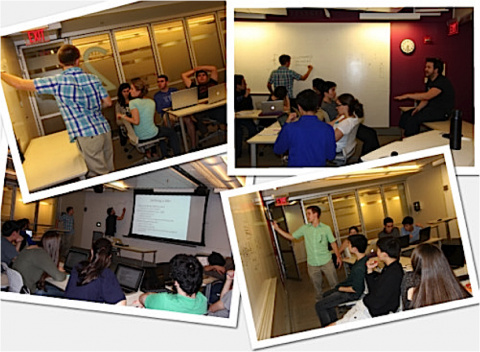
Introduce NBA and MLB datasets to undergraduates to help them gain expertise in exploratory data analysis, data visualization, statistical inference, and predictive modeling. Graduate students: Joe Futoma and Ken McAlinn, PhD students, Statistical Science Faculty instructor: Mine Cetinkaya-Rundel Course: STA 112 (Data Science) Applications: Assessing home field advantage Determining long...
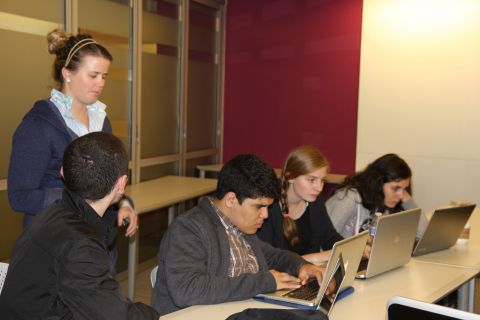
What drove the prices for paintings in 18th Century Paris? Graduate students: Hilary Cronheim and Sandra van Ginhoven, Duke Art, Law and Markets Initiative-DALMI Faculty instructor: Mine Çetinkaya-Rundel Course: STA112FS Better Living Through Data Science: Exploring/Modeling/Predicting/Understanding What drove the prices for paintings in 18th Century Paris? Auction price data Visual characteristics of...
STEM education often presents a very sanitized version of the scientific enterprise. To some extent, this is necessary, but overemphasizing neat-and-tidy results and scripted protocol assignments poses the risk of failing to adequately prepare students for the real-world mess of transforming experimental data into meaningful results. The fundamental aim of...

How do people make decisions? Graduate students: Emma Wu Dowd and Jonathan Winkle Faculty instructor: Scott Huettel Course: Psychology 201 To better understand how people make decision with uncertain outcomes, a Duke neuroscience lab collected measures of economic decision making, as well as a variety of self-reported personality measures and general...
Large-scale databases from the social, behavioral, and economic sciences offer enormous potential benefits to society. However, as most stewards of social science data are acutely aware, wide-scale dissemination of such data can result in unintended disclosures of data subjects’ identities and sensitive attributes, thereby violating promises–and in some instances laws to protect...
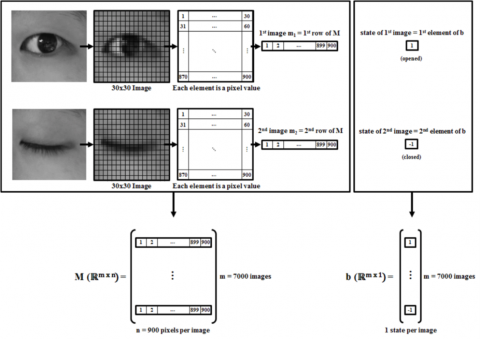
Dr. Guillermo Sapiro, professor in Pratt School of Engineering at Duke University, conducts ongoing autism research. Using image processing, he attempts to program a computer to detect whether babies (around eight to 14 months of age) display a sign of autism. This very early detection enables doctors to train these babies (when their brain...
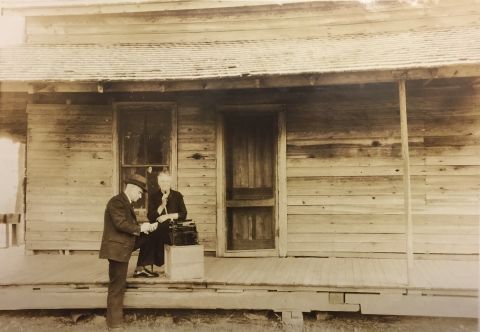
This project transforms an inaccessible audio archive of historic North Carolina folk music colllected by Frank Clyde Brown in the 1920s-40s into a vital, publicly accessible digital archive and museum exhibition. Project Team Trudi Abel & Victoria Szabo Louise Mentjes, Laura Williams, Winston Atkins, Craig Breaden Meghan O’Neill & Philip MacDonald Peter Ciporin, Ruochen Hao, Laura...
Showing 1-20 of 50 results