
2018 Projects
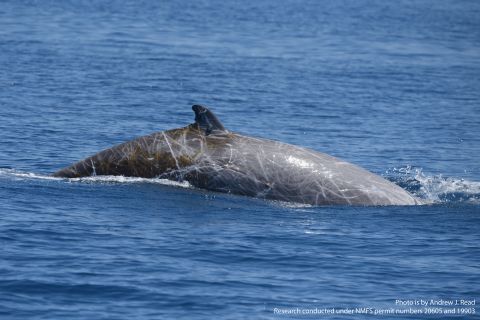
We introduced students to spatial analysis in QGIS and R using location data from two whale species tagged with satellite transmitters. Students were given satellite tracks from five Cuvier’s beaked whales (Ziphius cavirostris) and five short-finned pilot whales (Globicephala macrorhynchus) tagged off the North Carolina coast. Students then used RStudio...

Understanding how to generate, analyze, and work with datasets in the humanities is often a difficult task without learning how to code or program. In humanities centered courses, we often privilege close reading or qualitative analysis over other methods of knowing, but by learning some new quantitative techniques we better prepare...
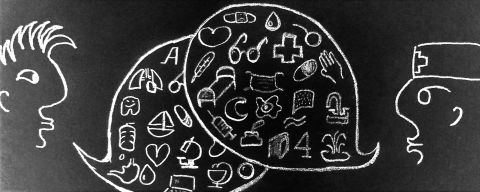
Samantha Garland (Computer Science), Grant Kim (Computer Science, Electrical & Computer Engineering), and Preethi Seshadri (Data Science) spent ten weeks exploring factors that influence patient choices when faced with intermediate-stage prostate cancer diagnoses. They used topic modeling in an analysis of a large collection of clinical appointment transcripts. Executive Summary (PDF) Disciplines Involved: Economics, PreHealth/PreMed, Biology,...
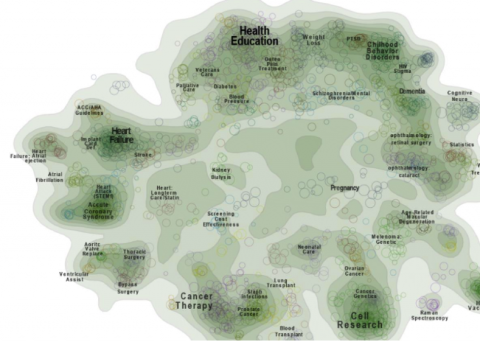
Zhong Huang (Sociology) and Nishant Iyengar (Biomedical Engineering) spent ten weeks investigating the clinical profiles of rare metabolic diseases. Working with a large dataset provided by the Duke University Health System, the team used natural language processing techniques and produced an R Shiny visualization that enables clinicians to interactively explore diagnosis clusters. Click...

Dima Fayyad (Electrical & Computer Engineering), Sean Holt (Math), David Rein (Computer Science/Math) spent ten weeks exploring tools that will operationalize the application of distributed computing methodologies in the analysis of electronic medical records (EMR) at Duke. As a case study, they applied these systems to an Natural Language Processing project on clinical narratives about...

Alexandra Putka (Biology/Neuroscience), John Madden (Economics), and Lucy St. Charles (Global Health/Spanish) spent ten weeks understanding the coverage and timeliness of maternal and pediatric vaccines in Durham. They used data from DEDUCE, the American Community Survey, and the CDC. This project will continue into the academic year via Bass Connections. Click here to read the Executive Summary...
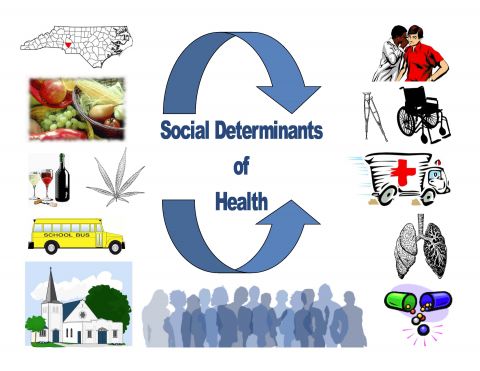
Kimberly Calero (Public Policy/Biology/Chemistry), Alexandra Diaz (Biology/Linguistics), and Cary Shindell (Environmental Engineering) spent ten weeks analyzing and visualizing data about disparities in Social Determinants of Health. Working with data provided by the MURDOCK Study, the American Community Survey, and the Google Places API, the team built a dataset and visualization tool that will assist the MURDOCK...
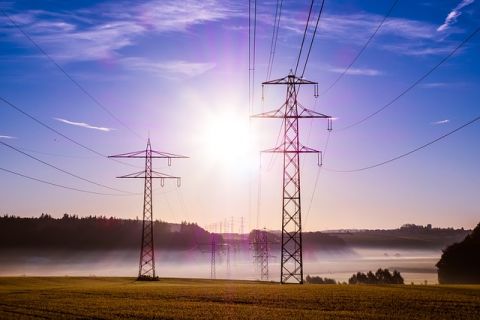
Varun Nair (Mechanical Engineering), Tamasha Pathirathna (Computer Science), Xiaolan You (Computer Science/Statistics), and Qiwei Han (Chemistry) spent ten weeks creating a ground-truthed dataset of electricity infrastructure that can be used to automatically map the transmission and distribution components of the electric power grid. This is the first publicly available dataset of its kind, and will be analyzed...
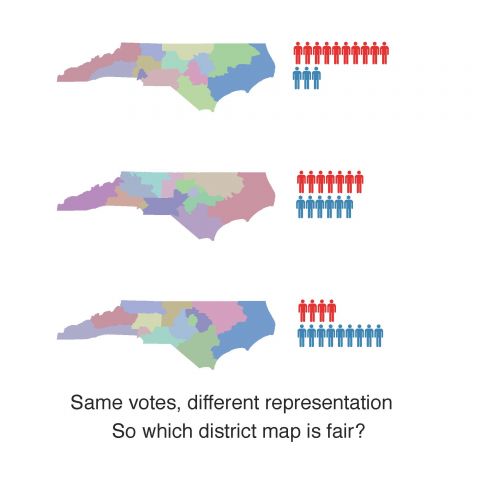
A team of students led by Professors Jonathan Mattingly and Gregory Herschlag will investigate gerrymandering in political districting plans. Students will improve on and employ an algorithm to sample the space of compliant redistricting plans for both state and federal districts. The output of the algorithm will be used to detect gerrymandering for a...
Lucas Fagan (Computer Science/Public Policy), Caroline Wang (Computer Science/Math), and Ethan Holland (Statistics/Computer Science) spent ten weeks understanding how data science can contribute to fact-checking methodology. Training on audio data from major news stations, they adapted OpenAI methods to develop a pipeline that moves from audio data to an interface that enables users to search...

David Liu (Electrical Computer Engineering) and Connie Wu (Computer Science/Statistics) spent ten weeks analyzing data about walking speed from the 6th Vital Sign Study. Integrating study data with public data from the American Community Survey, they built interactive visualization tools that will help researchers understand the study results and the representativeness of study participants. Click here...

Cecily Chase (Applied Math), Brian Nieves (Computer Science), and Harry Xie (Computer Science/Statistics) spent ten weeks understanding how algorithmic approaches can shed light on which data center tasks (“stragglers”) are typically slowed down by unbalanced or limited resources. Working with a real dataset provided by project clients Lenovo, the team created a monitoring framework that flags...

Statistical Science majors Eidan Jacob and Justina Zou joined forces with math major Mason Simon built interactive tools that analyze and visualize the trajectories taken by wireless devices as they move across Duke’s campus and connect to its wireless network. They used de-identified data provided by Duke’s Office of Information Technology, and worked closely with...

Alec Ashforth (Economics/Math), Brooke Keene (Electrical & Computer Engineering), Vincent Liu (Electrical & Computer Engineering), and Dezmanique Martin (Computer Science) spent ten weeks helping Duke’s Office of Information Technology explore the development of an “e-advisor” app that recommends co-curricular opportunities to students based on a variety of factors. The team used collaborative and content-based filtering to create a recommender-system...

Maksym Kosachevskyy (Economics) and Jaehyun Yoo (Statistics/Economics) spent ten weeks understanding temporal patterns in the used construction machinery market and investigating the relationship between these patterns and macroeconomic trends. They worked closely with a large dataset provided by MachineryTrader.com, and discussed their findings with analytics professionals from a leading asset management firm. Click...

Jake Epstein (Statistics/Economics), Emre Kiziltug (Economics), and Alexander Rubin (Math/Computer Science) spent ten weeks investigating the existence of relative value opportunities in global corporate bond markets. They worked closely with a dataset provided by a leading asset management firm. Click here for the Executive Summary Disciplines Involved: Economics, all Quantitative STEM Project Lead: Emma Raisel Project...
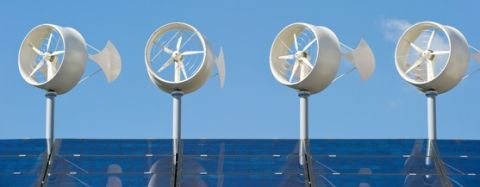
Brooke Erikson (Economics/Computer Science), Alejandro Ortega (Math), and Jade Wu (Computer Science) spent ten weeks developing open-source tools for automatic document categorization, PDF table extraction, and data identification. Their motivating application was provided by Power for All’s Platform for Energy Access Knowledge, and they frequently collaborated with professionals from that organization. Click here to read the...
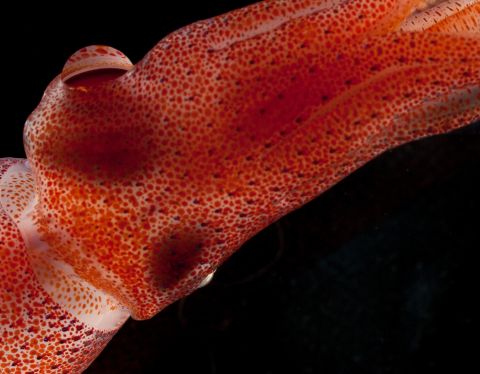
This Data Expedition introduced hypothesis-driven data analysis in R and the concept of circular data, while providing some tools for importing it and analyzing it in R. After exploring a simple dataset to learn these tools, we applied what we learned to two real examples of circular datasets: one testing for magnetoreception in salmon...

Our aim was to introduce students to the wealth of possibilities that human genotyping and sequencing hold by illustrating firsthand the power of these datasets to identify genetic relatives, using the story of the Golden State Killer’s capture with public genetic databases. Graduate Students: Ryan Campbell and Jenn Coughlan, Duke Biology Course: BIO190S,...

Large publicly available environmental databases are a tremendous resource for both scientists and the general public interested in climate trends and properties. However, without the programming skills to parse and interpret these massive datasets, significant trends may remain hidden from both scientists and the public. In this data exploration, students,...
Showing 1-20 of 32 results