

The US has one of the largest incarcerated populations per capita; prisons are dangerous environments with high in-prison and post-release mortality. Our 3rd City Mortality project tracks near-real-time data about individual deaths, including data completeness and release speed, across US state, federal, and Washington DC prison systems. Students will use...
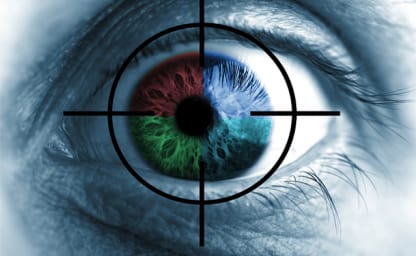
Biomedical Engineering and Electrical and Computer Engineering major David Brenes, and Electrical and Computer Engineering/Computer Science majors Xingyu Chen and David Yang spent ten weeks working with mobile eye tracker data to optimize data processing and feature extraction. They generated their own video data with SMI Eye Tracking Glasses, and created computer vision algorithms to categorize subject...
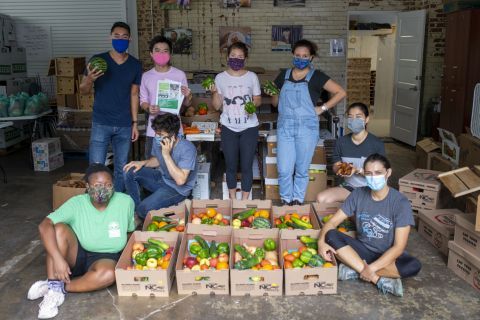
A team of students collaborating with Duke School of Medicine’s Root Causes Fresh Produce Program, community members, and physicians throughout the Duke Health network will help integrate data from food deliveries to Duke Health patients with patient health record data and other available data sources to create a dashboard that...
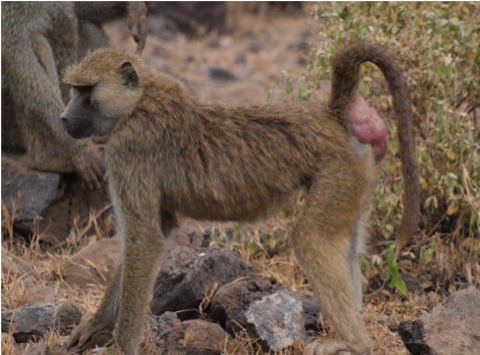
This project allowed students in BIOL 268D (Mechanisms of Animal Behavior) to explore the relationship between estrogen, female sexual swellings, and male mating success in wild baboons using data from the Amboseli Baboon Research Project. Students learned how to use the popular R packages dplyr and ggplot2 to calculate descriptive statistics about the dataset...

The course was designed as a Data Expedition to familiarize senior-level undergraduates with data collection and analysis. We ran the course during the lab section of BIOL 546L on the topic of hair as a mammalian adaptation. Students created testable hypotheses, compared fur/hair samples between species, and graphed their group’s...

A team of students led by Co-Principal Investigators Dr Jenny Immich and Dr Vicky McAlister will develop a geospatial methodology to automate data analysis originating from small unmanned aerial vehicles (SUAV) that seeks to identify the homes of ordinary medieval people within the modern Irish landscape. Known as aerial archeology,...
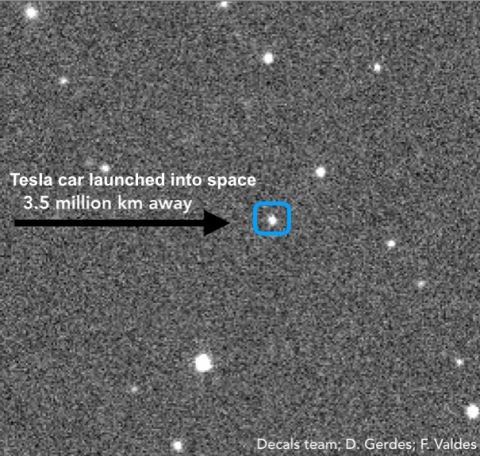
Astronomers from the Dark Energy Survey rely on images of deep space to understand the nature of the universe, but these images are often polluted with “space junk”: asteroids, comets, satellites, or other objects from our own solar system obstructing the telescope’s view. In order to perform their analysis, scientists...
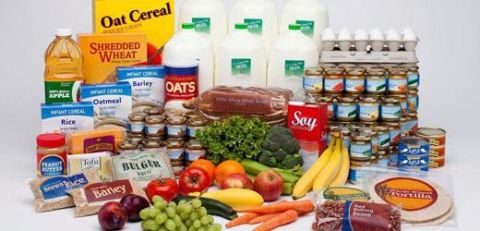
Kang Ni, Math/Econ major, Kehan Zhang, Econ/Stats/ major, and Alex Hong, spent ten weeks investigating a large collection of grocery store transaction data. They worked closely with Matt Harding Behavioral Economics and Healthy Food Choice Research Center. (BECR Center). Project Results The team used clustering techniques to identify distinct sets of products, a...

We apply word embedding models to corpora from the start of the Early Modern period, when the market economy began to dramatically expand in England. Word embedding models use neural networks to map vectors to words so that semantic relationships are preserved within the vectors’ geometry. Such models have been...
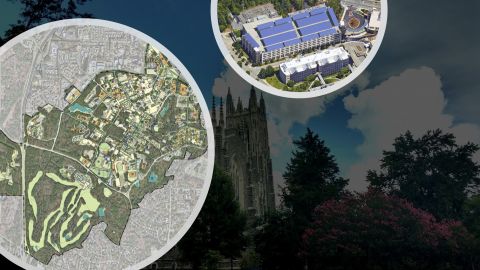
In collaboration with Data and Analytics Practice at OIT, our team has completed a series of critical analyses aiding Duke Facilities Management in further optimizing campus energy usage. Data cleaning tools, imputation techniques, and a variety of time series prediction methods ranging from autoregressive models to deep learning networks have...
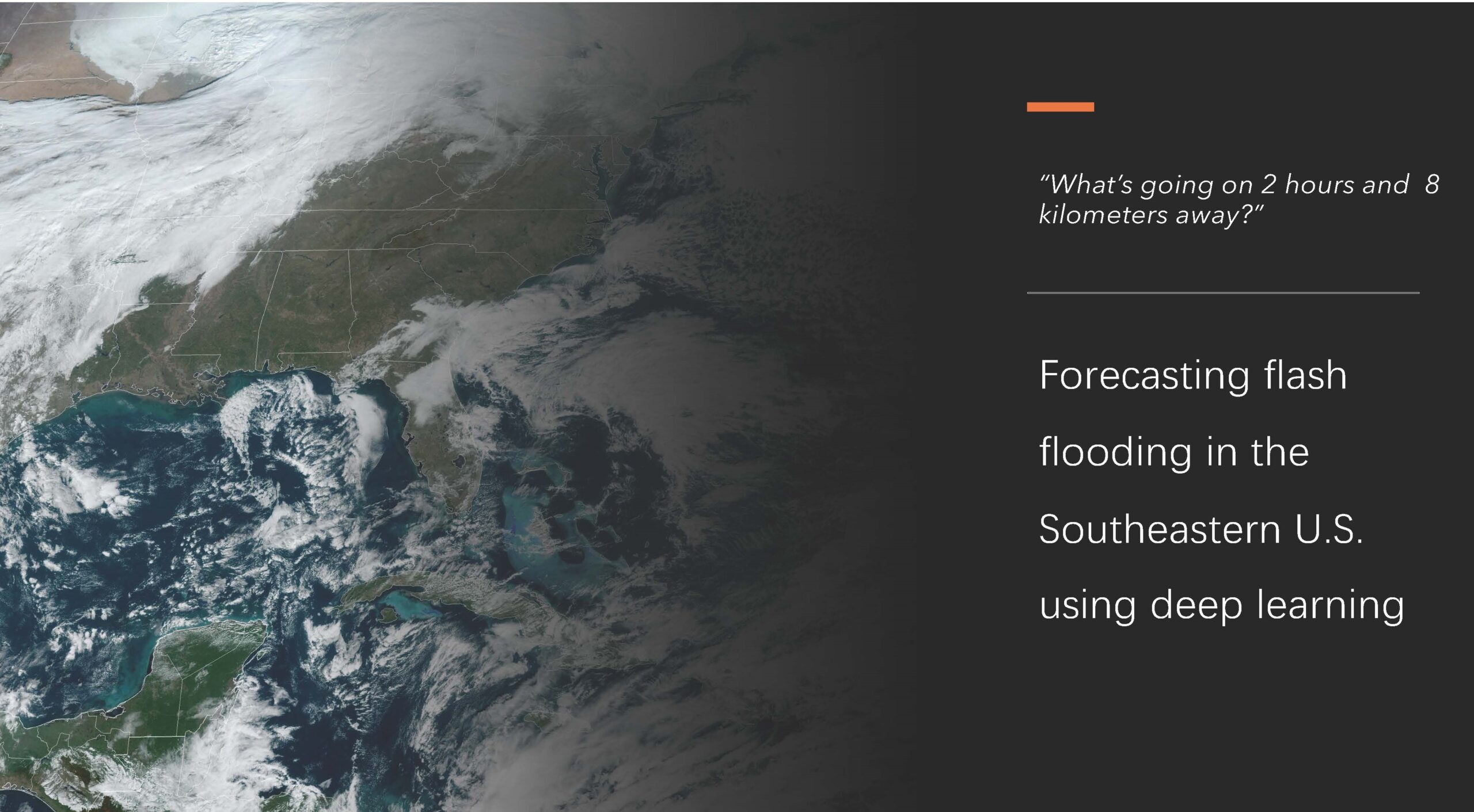
A group of students, guided by climate science and environmental engineering professors, will use deep learning models to enhance flash flood predictions in the Southeastern United States. They will study extreme weather events that contribute to flooding and learn to identify these events using satellite and radar imagery. By applying...

STEM education often presents a very sanitized version of the scientific enterprise. To some extent, this is necessary, but overemphasizing neat-and-tidy results and scripted protocol assignments poses the risk of failing to adequately prepare students for the real-world mess of transforming experimental data into meaningful results. The fundamental aim of...

CS majors Aiman Haider and Divya Nataraj spent ten weeks analysing data and developing tools to assist the Fresh Produce Program (FPP) in achieving its core goals of creating a more equitable, sustainable, and integrated local food system. Using modern geospatial data analysis techniques, the team identified optimal locations for...

BME major Neel Prabhu, along with CompSci and ECE majors Virginia Cheng and Cheng Lu, spent ten weeks studying how cells from embryos of the common fruit fly move and change in shape during development. They worked with Cell-Sheet-Tracker (CST), an algorithm develped by former Data+ student Roger Zou and faculty lead Carlo Tomasi. This algorithm uses computer vision...
A team of students led by researchers in the BIG IDEAs Lab will optimize and further develop an existing cloud-based infection detection platform that populates and translates wearable data from a variety of sources. The project will involve working with existing wearable data pipelines (e.g., APIs) to collect, process, and...

A student team led by researchers at Duke Surgery and Global Health Institute will further develop the computer application – Alcohol Use Behavioral Phenotyping Test (AUBPT) that can help predict alcohol use and alcohol use disorder risks based on personal characteristics and behavioral performance on Research Domain Criteria paradigms/games. Students...

A team of students led by researchers in English and Computer Science will investigate a fundamental question about artificial intelligence: can machines be truly creative? Students will design experiments comparing human and AI storytelling, build datasets and computational tools to measure originality and surprise, and explore what current language models...
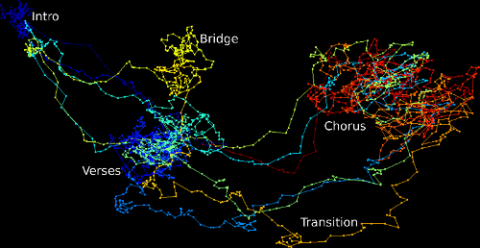
In this work, we turn musical audio time series data into shapes for various tasks in music matching and musical structure understanding. In particular, we use sliding window representations of chunks of audio to create high dimensional time-ordered point clouds, and we extract information by analyzing the geometry of these...

Computer Science majors Erin Taylor and Ian Frankenburg, along with Math major Eric Peshkin, spent ten weeks understanding how geometry and topology, in tandem with statistics and machine-learning, can aid in quantifying anomalous behavior in cyber-networks. The team was sponsored by Geometric Data Anaytics, Inc., and used real anonymized Netflow data provided by Duke’s Information Technology Security Office. The team produced features...

Joy Patel (Math and CompSci) and Hans Riess (Math) spent ten weeks analyzing massive amounts of simulated weather data supplied by Spectral Sciences Inc. Their goal was to investigate ways in which advanced mathematical techniques could assist in quantifying storm intensity, helping to augment today’s more qualitatively-based methods. Project Results: The team used...
Showing 161-180 of 388 results