

Using data from the Durham Compass and the NC School Report Card among many other sources, this team continued the development of an interactive R Shiny dashboard that permits exploration of school statistical data. The team aimed to explore Durham Public School (DPS) zones through an asset-based lens to support ethical...
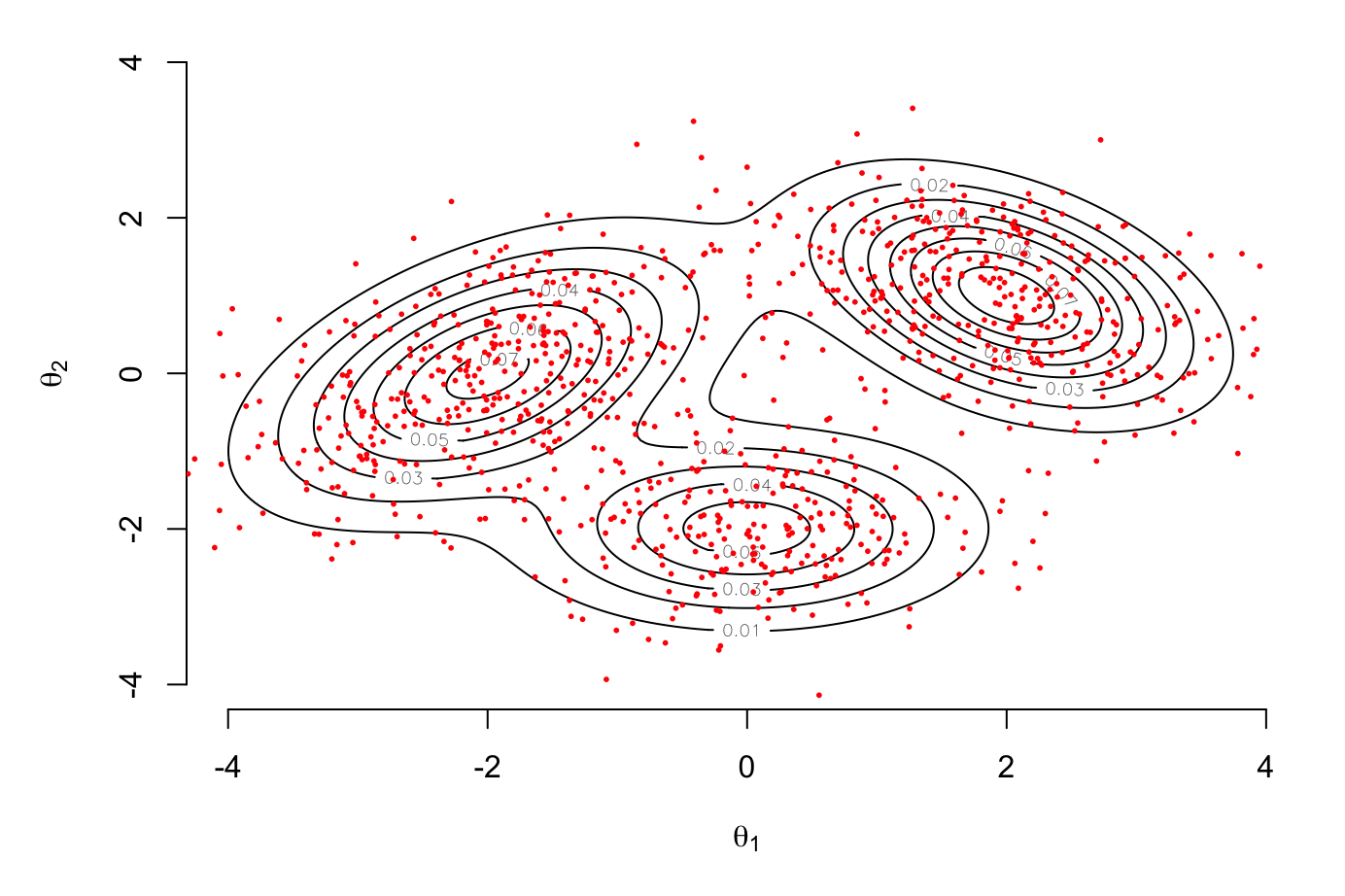
If a statistician is like a cook and a data analysis is like the meal they serve, then this project is about keeping the knives sharp. To perform a Bayesian analysis, we often generate random samples from a complicated probability distribution called the posterior. The algorithms we use to do this...
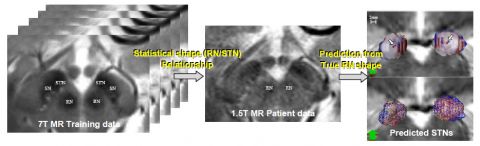
The sub-thalamic nucleus (STN) within the sub-cortical region of the Basal ganglia is a crucial targeting structure for Deep brain stimulation (DBS) surgery, in particular for alleviating Parkinson’s disease (PD) symptoms. Volumetric segmentation of such small and complex structure, which is elusive in clinical MRI protocols, is thereby a pre-requisite...

Using social network analysis to predict survival in large-brained mammals. Graduate students: Joseph Feldblum, Evolutionary Anthropology, and Vivienne Foroughirad, Marine Science & Conservation Faculty instructor: Julie Teichroeb
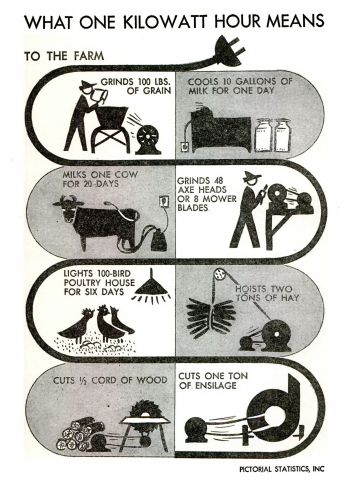
Between 1935 and 1945, rural electricity access shot up from roughly 10% to 90%. During this time, the Rural Electrification Administration funded an Electric Farm Equipment (EFE) Roadshow as part of its mission to expand electricity access and demand. Digitizing massive amounts of archival data, our team has sought to...

Anne Driscoll (Economics, Statistical Science), and Austin Ferguson (Math, Physics) spent ten weeks examining metrics for inter-departmental cooperativity and productivity, and developing a collaboration network of Duke faculty. This project was sponsored by the Duke Clinical and Translational Science Award, with the larger goal of promoting collaborative success in the School of Medicine...

This data expedition focused on biological senses, in particular, musicality. The students read and summarized four scientific articles in discussion groups to build their background knowledge when it comes to how humans and animals use pitch and rhythm in music, language, and songs. We then had each student use headphones...

This data expedition focused on biological senses, in particular, musicality. The students read and summarized four scientific articles in discussion groups to build their background knowledge when it comes to how humans and animals use pitch and rhythm in music, language, and songs. We then had each student use headphones...
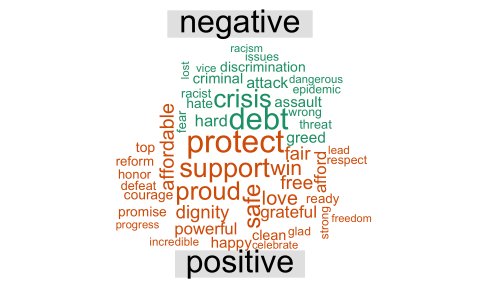
The data that students see in their statistics courses are often constrained to numeric and tabular data. However, there is an exciting field of data science and statistics known as text analysis. This expedition introduces students to the concept of treating text as data frames of words, and demonstrates how...

Annie Xu (Rice, CEE), Liuren Yin (ECE), and Zoe Zhu (Data Science) spent ten weeks analysing usage data for MorphoSource, a publicly available 3D data repository maintained by Duke University. Working with Python and Tableau, the team developed an interactive dashboard that allows MorphoSource staff to explore usage patterns for...

Matt and Ken led two labs for the engineering section of STA 111/130, an introductory course in statistics and probability. The lab assignments were written by Matt and Ken in order to bridge the gap between introductory linear regression, which is often explained in terms of a static, complete dataset,...

The aim of this Data Expedition was for students to learn hands-on data visualization techniques using a variety of data types. Students first discussed how data visualization is useful, and tips to make graphs both visually appealing and easy to understand. Graduate Students: Jenn Coughlan, Ryan Campbell Course: Biology 490s – Methods...

Our aim was to introduce students to the wealth of possibilities that human genotyping and sequencing hold by illustrating firsthand the power of these datasets to identify genetic relatives, using the story of the Golden State Killer’s capture with public genetic databases. Graduate Students: Ryan Campbell and Jenn Coughlan, Duke Biology Course: BIO190S,...
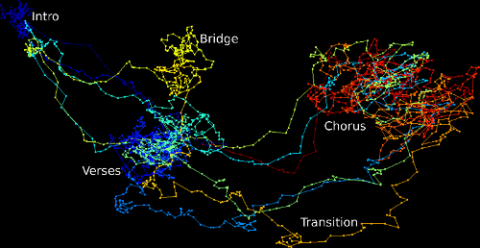
This data expedition introduced students to “sliding windows and persistence” on time series data, which is an algorithm to turn one dimensional time series into a geometric curve in high dimensions, and to quantitatively analyze hybrid geometric/topological properties of the resulting curve such as “loopiness” and “wiggliness.” Graduate student: Chris...
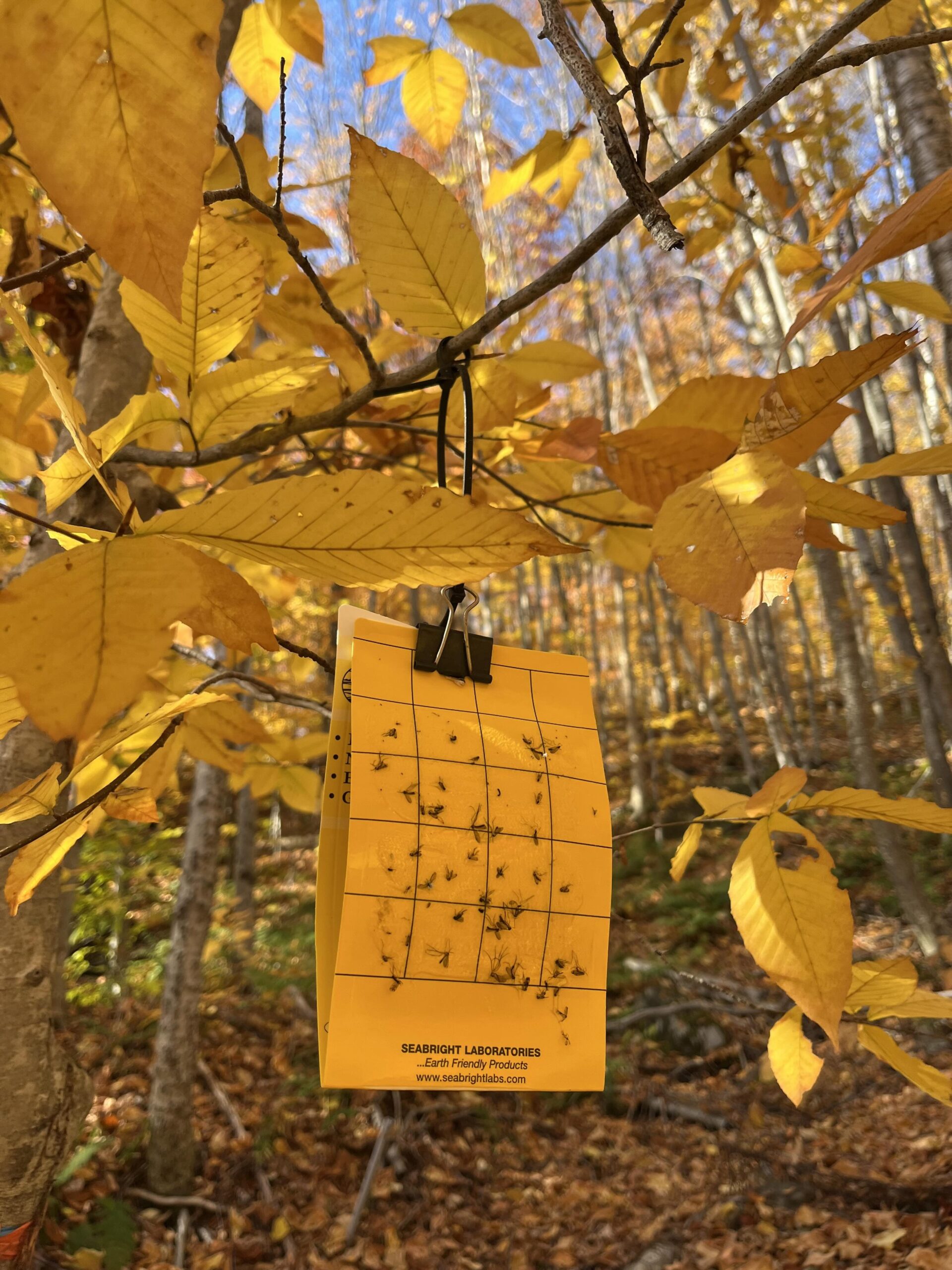
A team of students led by Hubbard Brook Experimental Forest researchers will develop a machine learning approach to identify aquatic insects and contribute to a long-term ecological dataset being used to examine changing insect population dynamics. Students will use a set of existing images to train a supervised machine learning...

This project is also part of Duke’s first Climate+ cohort. A student team working with the Energy Data Analytics Lab will work to democratize access to data relevant to climate change mitigation and adaptation planning as well as the underlying models to acquire those data. This project will work towards building the...

This project helped to build a globally scalable foundation model to enable near real-time tracking of climate change causes and impacts. A foundation model is a model (usually a deep neural network) that has been trained on a large and diverse set of data, after which it can be adapted...

Maddie Katz (Global Health and Evolutionary Anthropology Major), Parker Foe (Math/Spanish, Smith College), and Tony Li (Math, Cornell) spent ten weeks analyzing data from the National Transgender Discrimination Survey. Their goal was to understand how the discrimination faced by the trans community is realized on a state, regional, and national level, and to partner with advocacy organizations...

The Triangle Census Research Network (TCRN) is an interdisciplinary team of researchers from Duke University and the National Institute of Statistical Sciences dedicated to improving the way that federal statistical agencies collect, analyze, and disseminate data to the public. Its primary mission is to develop broadly-applicable methodologies that transform and improve data...
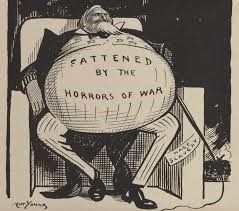
How Much Profit is Too Much Profit? Chris Esposito (Economics), Ruoyu Wu (Computer Science), and Sean Yoon (Masters, Decision Sciences) spent ten weeks building tools to investigate the historical trends of price gouging and excess profits taxes in the United States of America from 1900 to the present. The team used a variety of text-mining...
Showing 341-360 of 388 results