How do elites maintain power when the world around them is being radically transformed? Between the late sixteenth and early eighteenth centuries, England was reshaped by the explosive growth of global trade. Political and socio-economic elites had to adapt—or risk losing power. Who benefited from these changes, who lost out, and how did different groups respond to a rapidly changing economy?
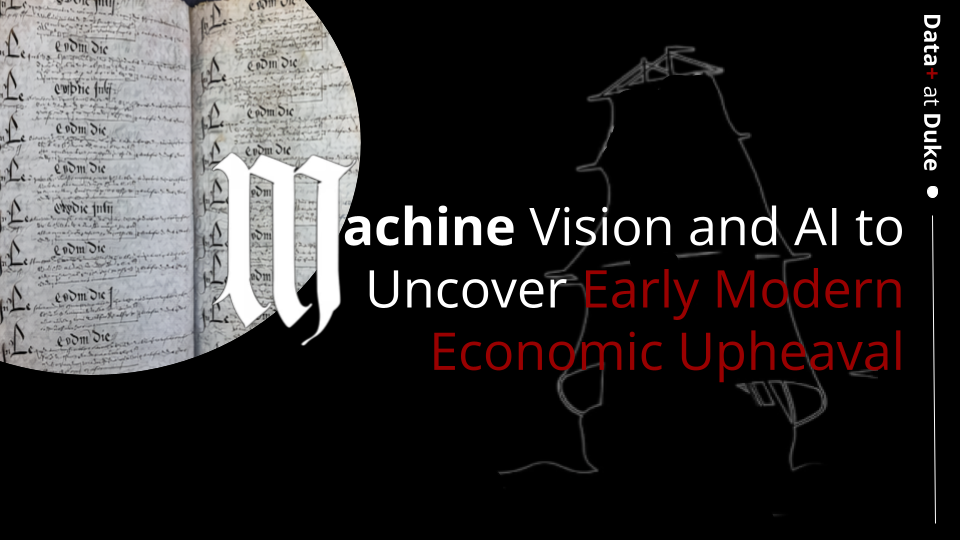
This project tackles these questions by utilizing a remarkable but underused historical source: port books, handwritten records that document ships, cargoes, taxes, merchants, and trade routes in Early Modern England. Until now, these manuscripts have been nearly impossible to analyze at scale. Our project aims to change that.
Using recent breakthroughs in machine vision and automated text recognition, this project combines history, data science, and AI. Over the summer, students will help develop a multi-step workflow to teach modern computer vision models how to read and extract data from centuries-old handwriting—turning archival records into usable economic data and opening new ways to study power, trade, and inequality in the past. Along the way, students will build skills at the intersection of coding and historical interpretation. They will learn how to work with messy, imperfect data, make informed methodological choices, and connect technical decisions to substantive historical questions.
This project is in partnership with the Medieval and Renaissance Studies Program.