
For our Data+ project, we partnered with Rewriting the Code (RTC), a non-profit organization committed to empowering and fostering a community of college women with a passion for technology. We developed company and industry profiles for the recruitment process that included information ranging from interview and offer rate to negotiation...

A team of students led by an interdisciplinary group including statistician Fan Li, neurologist Brian Mac Grory, and preventive medicine physician/clinical data scientist Jay Lusk will integrate information from diverse real-world datasets to better understand risk factors for cardiovascular diseases such as heart attack and stroke and for cognitive disorders...

A team of students led by an interdisciplinary group including statistician Fan Li, neurologist Brian Mac Grory, and physician/population health scientist Jay Lusk will integrate information from diverse real-world datasets to better understand risk factors for cardiovascular diseases such as heart attack and stroke. The team will use techniques ranging...

Shannon Houser (Stats/BioChem), Junbo Guan (MIDS), and Gaurav Sirdeshmukh (Stats) spent ten weeks exploring data concerning child and family health in Yolo County, CA. Using R Shiny, the team produced an interactive data dashboard that enables Yolo County residents to find healthcare and childcare providers, food resources, and transportation information....
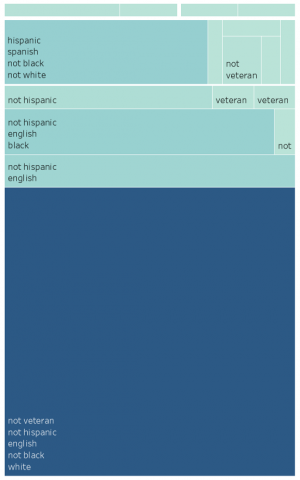
A large and growing trove of patient, clinical, and organizational data is collected as a part of the “Help Desk” program at Durham’s Lincoln Community Health Center. Help Desk is a group of student volunteers who connect with patients over the phone and help them navigate to community resources (like...
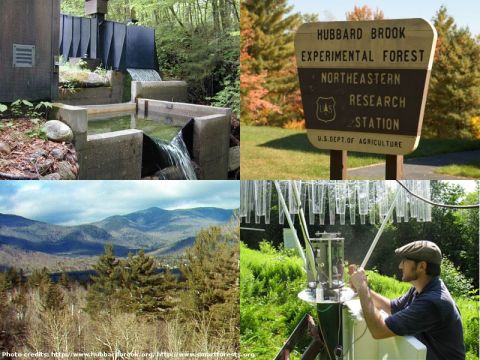
Devri Adams (Environmental Science), Annie Lott (Statistics), and Camila Vargas Restrepo (Visual Media Studies, Psychology) spent ten weeks creating interactive and exploratory visualizations of ecological data. They worked with over sixty years of data collected at the Hubbard Brook Experimental Forest (HBEF) in New Hampshire. Project Results: The team created a “data stories” website aimed at high school students and undergraduates...
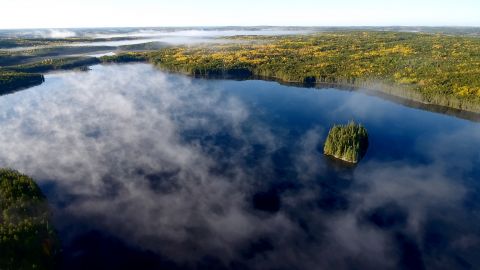
Vincent Wang (Computer Science, CE), Karen Jin (Bio/Stats), and Katherine Cottrell (Computer Science) spent ten weeks building tools to educate the public about lake dynamics and ecosystem health. Using data collected over a period of 50 years at the Experimental Lake Area (ELA) in Ontario, the team preprocessed and merged datasets, made a...

Matthew Newman (Sociology), Sonia Xu (Statistics), and Alexandra Zrenner (Economics) spent ten weeks exploring giving patterns and demographic characteristics of anonymized Duke donors. They worked closely with the Duke Alumni Affairs and Development Office, with the goal of understanding the data and constructing tools to generate data-driven insight about donor behavior. Project Results The team used...
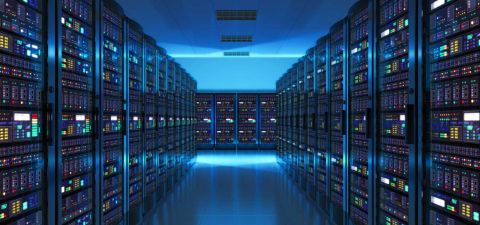
Cecily Chase (Applied Math), Brian Nieves (Computer Science), and Harry Xie (Computer Science/Statistics) spent ten weeks understanding how algorithmic approaches can shed light on which data center tasks (“stragglers”) are typically slowed down by unbalanced or limited resources. Working with a real dataset provided by project clients Lenovo, the team created a monitoring framework that flags...

ECE majors Mitchell Parekh and Yehan (Morton) Mo, along with IIT student Nikhil Tank, spent ten weeks understanding parking behavior at Duke. They worked closely with the Parking and Transportation Office, as well as with Vice President for Administration Kyle Cavanaugh. Project Results After extensive discussions with the data provider, the team was able to provide key...
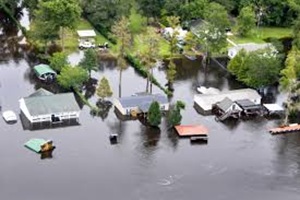
A team of students led by Duke faculty in engineering, economics, and environmental policy will study how investments in flood protection, such as levees, stormwater systems, and nature-based solutions, affect not only flood risk, but also local property values, tax revenues, and community financial resilience. Students will combine climate, economic,...
A team of students led by Statistical Science professors Mine Çetinkaya-Rundel and Maria Tackett will pull together all data associated with DataFest (https://www2.stat.duke.edu/datafest) for the purpose of retrospective archiving and documentation as well as creating a valuable resource that can serve as the one-stop-shop for students interested in participating in...

We trained an object detection model to locate wind turbines in overhead satellite imagery. Because these deep learning models require large amounts of training data, and satellite imagery of wind turbines is rare and expensive to collect, we created synthetic satellite imagery using 3D modeling software. We then supplemented our...
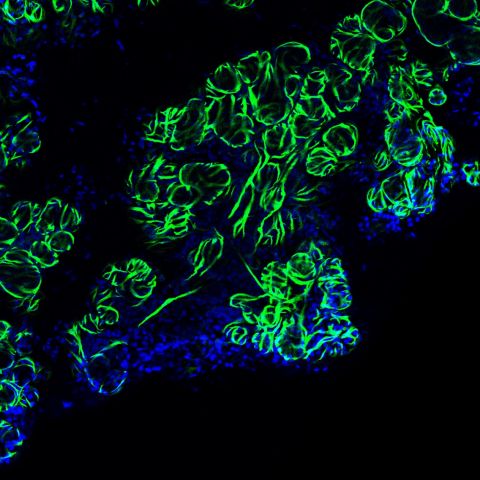
Bob Ziyang Ding (Math/Stats) and Daniel Chaofan Tao (ECE) spent ten weeks understanding how deep learning techniques can shed light on single cell analysis. Working with a large set of single-cell sequencing data, the team built an autoencoder pipeline and a device that will allow biologists to interactively visualize their own data. Click here...

We led a 75-minute class session for the Marine Mammals course at the Duke University Marine Lab that introduced students to strengths and challenges of using aerial imagery to survey wildlife populations, and the growing use of machine learning to address these “big data” tasks. Graduate students: Gregory Larsen and Patrick...

The application of deep learning to Alzheimer’s disease (AD) research using MRI is a rapidly evolving field, with existing studies serving primarily as proof of concept. This Data+ project aims to contribute to the development of a deep learning model that integrates MRI-based topological biomarkers for the early detection of...

Louis Hu (CS/Math), Fayfay Ning (Math/CS), and Kieran Lele (CS/Sociology) spent ten weeks exploring methods for exploring the similarities between networks of massive size, such as those arising from social media or from protein-protein alignment. The team used a variety of mathematical and software techniques and delivered a comprehensive analysis...

Katelyn Chang (Computer Science, Math) and Haynes Lynch (Environmental Science, Policy) spent ten weeks building tools to analyze and visualize geospatial and remote sensing data arising from the Alligator River National Wildlife Refuge (ARNWR). The team produced interactive maps of physical characteristics that were tailored to specific refuge management professionals, and also built classifiers for...

In collaboration with Duke’s River Center, a team of students will use remote sensing, in-situ water quality data, and machine learning algorithms to detect saltwater intrusion in coastal rivers. As sea levels rise, coastal waterways will become increasingly saline, threatening freshwater biodiversity and ecosystem services. Students will develop a harmonized...
Students will coordinate with the Organisation for Economic Co-operation and Development (OECD) Working Party on Bio-, Nano-, and Converging Technology to support the development of impact assessment tools for the use of neurotechnologies. This project would constitute Phase I of developing a “neurotech” impact assessment tool that analyses the effects...
Showing 101-120 of 388 results